

Introduction: Trading Is a Numbers Game—Without Discipline, You Can’t Replicate Results
“I feel like I’m going to win today”—that feeling is the most dangerous.
Trading is not a lottery. Wins and losses always come mixed, and short-term results swing around.
What matters is not one win, but whether you come out ahead when you repeat the same setup again and again—in other words, whether your strategy has positive expectancy.
Even if your strategy has positive expectancy, it falls apart the moment you change the rules based on emotion.
Increasing lot size, widening your stop loss, taking profits too early—once you do that, you’re no longer trading the conditions you tested.
To realize a strategy’s true expectancy, discipline is non-negotiable.
When discipline breaks down, you end up here:
- You can’t explain why you won or lost (Was it luck? Skill? You don’t know.)
- Your tested expectancy stops showing up (because your rules got mixed)
- You can’t improve (you can’t pinpoint what to fix)
With discipline, trading works as a numbers game:
- Entry conditions stay consistent (you only take the same type of setup)
- Risk stays consistent (you finish with the same loss limit)
- Exits stay consistent (you follow the same take-profit/stop-loss rules)
And the biggest reason discipline collapses is emotion—fear, greed, impatience, regret.
If you can’t stay disciplined, it’s not because you’re “weak-minded” or “not trying hard enough.”
Discipline is something you protect with systems. This article explains practical ways to “systemize” your trading so you can stay consistent.
Only when you have both expectancy and discipline do your results become more stable over the long run.
Related article: Probability-Based Forex Trading: Expectancy, Risk–Reward & EA Backtesting
Without Discipline, Expectancy Disappears: How Rule-Breaking Ruins Performance
A strategy with positive expectancy (Expected Value / EV) can produce positive results when you repeat the same rules under the same conditions.
But once discipline breaks, expectancy becomes impossible to measure before you can even judge whether it’s positive or negative.
Related article: What Is Trading Expectancy in FX? Organizing EAs, Win Rate, Risk-Reward, and Money Management
Expectancy Depends on a “Set of Rules”
You can express expectancy in a simple form like this:
Expectancy = Win rate × Average win − Loss rate × Average loss
Your entry rules, stop-loss distance, take-profit distance, and other rules must stay consistent for it to be the expectancy of that strategy.
Breaking Rules Turns It Into a Different Strategy
It’s easy to think, “A few exceptions won’t matter.” In real trading, it often works the other way around.
Rule-breaking tends to happen in unfavorable directions.
- Widening the stop loss → your average loss grows, expectancy worsens
- Taking profit too early → your average win shrinks, expectancy worsens
- Increasing lot size without a rule → only the damage from losses gets bigger
- Entering outside your rules → win rate and RR (risk-reward ratio) become unstable
Once you start doing this, you end up with a mix of the tested strategy + in-the-moment decisions. At that point, you can’t measure expectancy properly.
Why a Small Breakdown Can Still Hit Hard
Even a positive-expectancy strategy includes losses.
The real problem is that after losses, people often break rules only when they’re losing.
For example, you usually keep “risk per trade = 1% of account balance,” but after a losing streak you jump to 2% or 3%.
Winners still follow the rules, but losers get bigger—your average loss deteriorates. As a result, even a strategy with positive expectancy can turn negative in real execution.
To Protect Expectancy, Fix Your Risk and Fix Your Exits
If you want expectancy to show up as real profit, two points matter most:
- Fixed risk: Keep the loss cap per trade (e.g., 1%) the same every time
- Fixed exits: Decide SL/TP (stop loss / take profit) in numbers in advance, and place them together
Fixed risk helps you avoid fatal damage during losing streaks and gives expectancy room to play out.
Fixed exits reduce the most common rule breaks, like “widening the stop” or “taking profit too early.”
The Moments Emotion Breaks Discipline: Revenge, Greed, Fear, FOMO, Overconfidence
Discipline breaks more often from emotional reflex than from lack of knowledge.
A losing streak, a sudden spike, a floating profit—those are the moments where rules slip.
Related article: Emotion Is the Biggest Enemy in Trading: How to Avoid Late Stops and Early Take-Profits (and Where EAs Help)
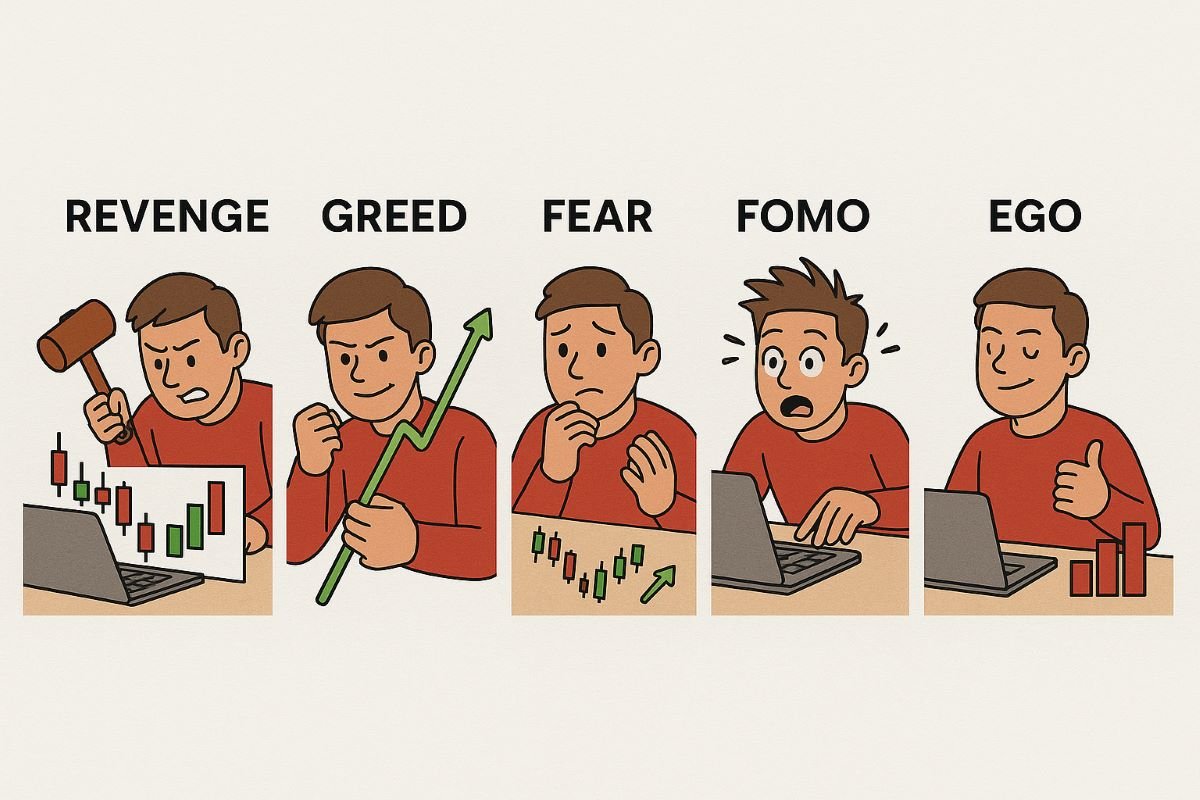
1. Revenge Trading (Trying to Get It Back)
Right after a loss, you think, “I’ll make it back on the next one.”
- Increasing lot size (breaking fixed risk)
- Loosening your entry criteria (more rule-breaking trades)
- Widening the stop loss (average loss gets bigger)
2. Greed (Wanting More)
When you’re in profit, you’re tempted to bend the rules.
- Holding past your take-profit plan → price reverses and you exit near breakeven
- Adding positions → risk expands beyond what you planned
3. Fear (Can’t Pull the Trigger / Want to Exit Fast)
Fear shows up not only in losses, but also in wins.
- Skipping a valid setup → fewer samples, less consistency
- Taking profit too early → average win shrinks
- Delaying the stop loss → average loss grows
4. FOMO (Fear of Missing Out)
A sudden pump or dump makes you jump in on impulse.
- Market entries outside your rules
- Entering around major news (ignoring spread widening and slippage)
- Buying highs / selling lows becomes more likely
5. Overconfidence (“I’m on Fire Today”)
This often happens after a winning streak.
- Increasing lot size (fixed risk breaks)
- Trading more often (sloppy entries sneak in)
- Stop loss gets “loose” (you stop assuming you can lose)
Emotion Starts With Triggers
If you know your triggers, you can manage them before they take over.
- A big win or big loss (emotional rebound)
- Major economic releases / central bank headlines (sudden volatility)
- Sharp spikes and drops (the “left behind” feeling)
- Lack of sleep, poor health, time pressure
From the next section, we’ll stop trying to “beat emotions” and instead build systems that leave less room for emotion—risk caps, order patterns, and automation.
The Foundation of Discipline Is a “Loss Cap”: Position Sizing, Stops, and Risk-Reward First
Discipline won’t last if you rely on willpower alone. What works in practice is a design that caps losses.
Before you worry about entry rules, decide your loss limit.
- For example, risk 1% of your account per trade
- Don’t raise the cap after a losing streak (don’t jump to 2%)
When your cap is fixed, even a string of losses stays “within plan,” and emotions are less likely to take control.
Fix Your Stop Loss (SL) as a Price Level
If your stop is vague, your average loss grows.
- Place the SL where your trade idea is invalidated
- Don’t move it because “it might come back”
- If you adjust it, only do it by pre-set rules (breakeven move, trailing stop, etc.)
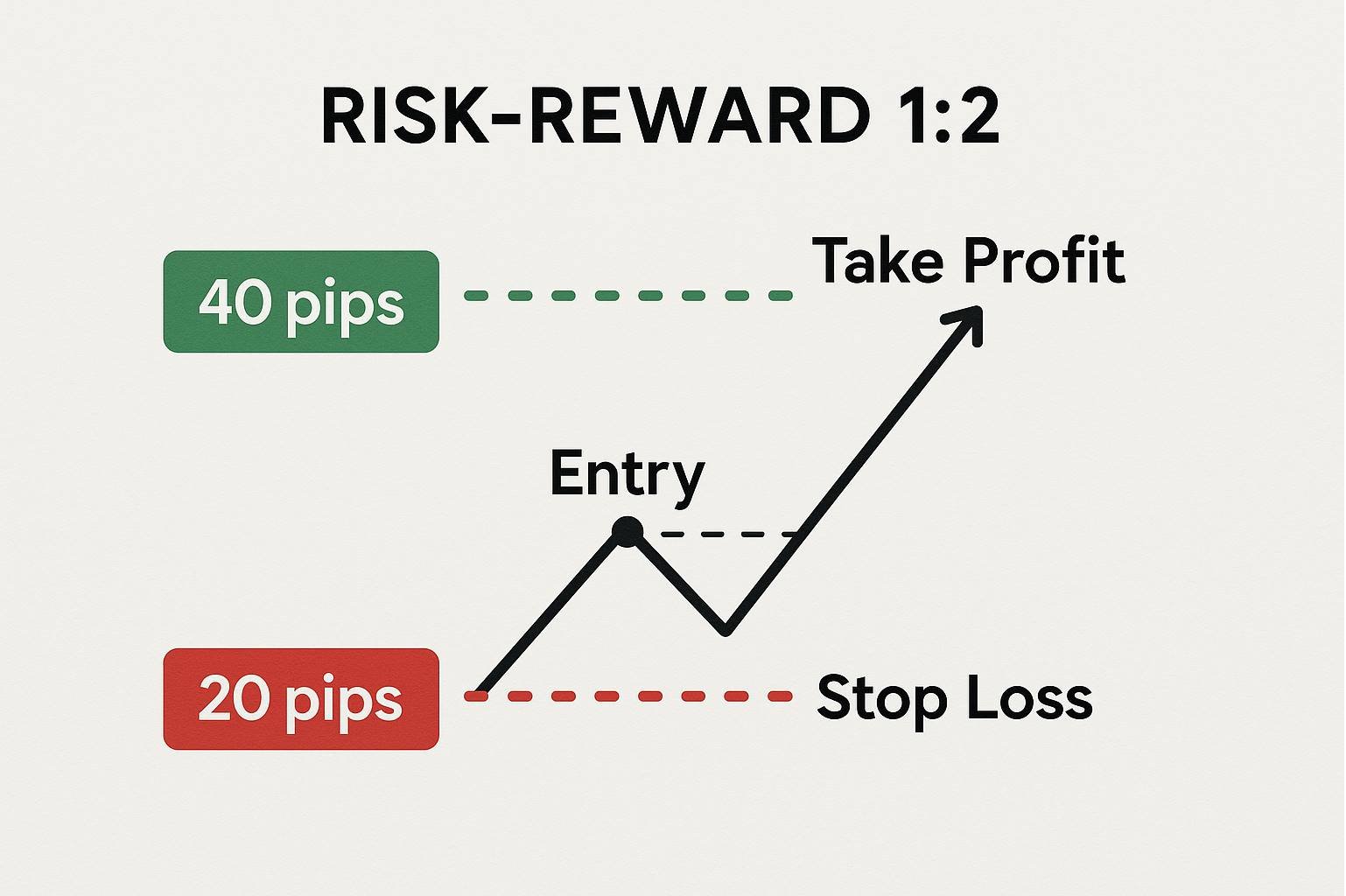
Standardize Exits With RR (Risk-Reward Ratio)
To avoid changing exits every time, design with RR (risk-reward ratio).
If your stop is 20 pips and your target is 40 pips, that’s RR = 1:2.
Calculate Lot Size From Your Risk Cap and SL Distance
Don’t pick lot size based on mood. Calculate it from your risk cap (%) and SL distance.
This helps prevent avoidable accidents like “bigger loss than expected on high volatility” or “keeping the same lot size even though the stop is wider.”
Summary: Build Discipline From a Design You Can Actually Follow
The order is simple:
- Set your risk cap (%)
- Set your SL (price level)
- Set your RR (risk-reward) to define the target
- Calculate and fix your lot size
With this base in place, expectancy is far more likely to show up in real trading.
Order Patterns to Protect Discipline: Use IFD-OCO to Fix Entry and Exit
A practical way to stay disciplined is not “trying harder,” but deciding an order pattern in advance.
Fix the parts that cause the most hesitation: entry and exit.
What Is IFD-OCO? (Simple Explanation)
IFD (If Done) means: after a pending order (limit/stop) triggers, the next orders are placed automatically.
OCO (One Cancels the Other) means: place TP (take profit) and SL (stop loss) together; when one triggers, the other is cancelled.
So IFD-OCO makes this a single pattern:
Entry → (once filled) place TP and SL together.
Why IFD-OCO Helps Discipline
- You don’t delay the stop loss (SL is placed from the start)
- Your exits don’t drift (TP/SL are fixed in numbers)
- It’s easier to reduce market-order impulse (you can trade mainly with pending orders)
Exits are where emotions hit hardest, so it’s rational to fix them in advance.
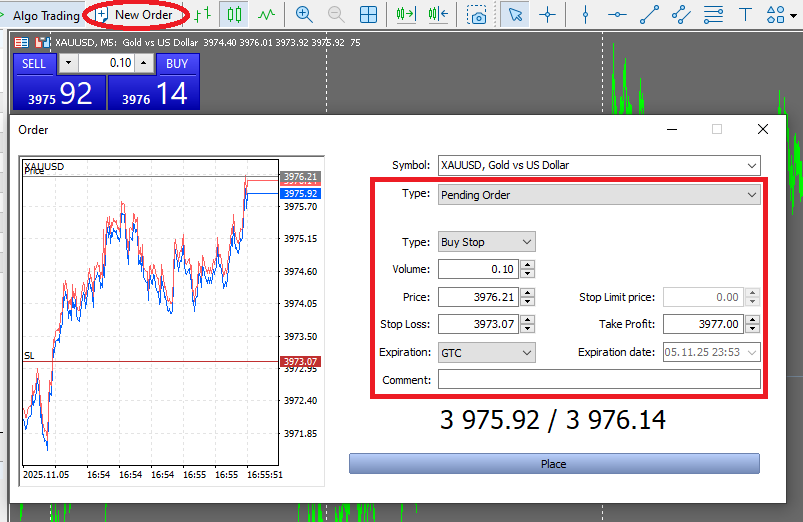
When You Can See Exits on the Chart, Hesitation Drops
When TP/SL are placed together, you see the lines on the chart.
That visual clarity makes it easier to stick to the plan even when your emotions wobble.
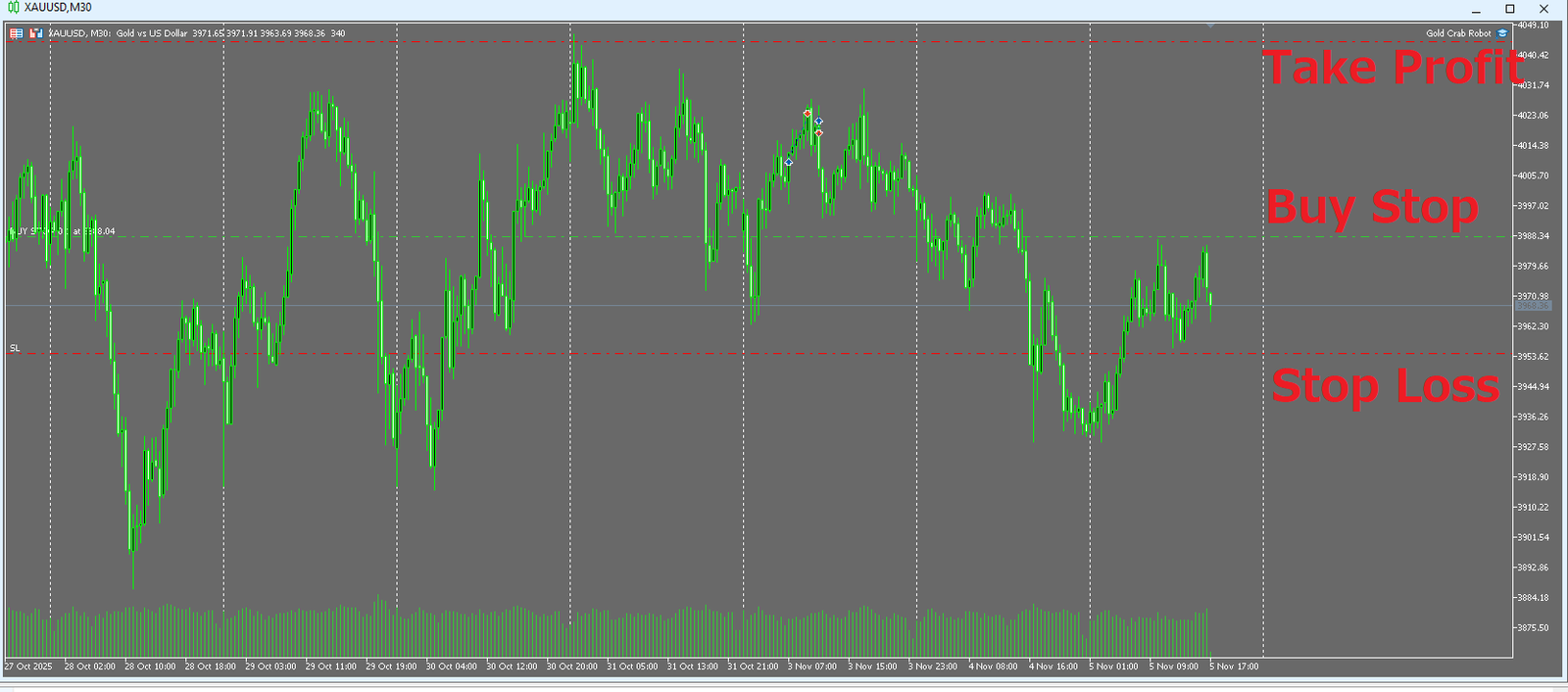
Example Pattern: Make It the Same Flow Every Time
- Set entry as a pending order (limit/stop)
- Set SL and TP at the same time (RR is fixed here too)
- After entry, don’t touch the trade outside your pre-set rules
Reduce Market-Order Impulse: Use Limit/Stop Orders to Avoid Chasing
A classic way discipline breaks is the impulse to “get in right now.”
If you hit Market the moment you see a spike, rule-breaking trades creep in.
Why Market Orders Get Messy
- Impulse is stronger (your criteria get vague)
- Fills can get worse (spread widening and slippage during fast moves)
Use Pending Orders to Enforce “Enter Only When Conditions Match”
When pending orders (limit/stop) are your default, your trading becomes a pattern.
- Buy Stop / Sell Stop: enter only if price reaches your breakout level
- Buy Limit / Sell Limit: enter only if price pulls back to your level
The more you rely on pending orders, the less you chase.
And because you’re calmer while waiting, it’s easier to fix TP/SL in advance (great fit with IFD-OCO).
“No-Chase Rules” That Help in Practice
- No Market entries (if you allow exceptions, define them ahead of time)
- If you feel “left behind,” don’t enter (that’s a FOMO signal)
- No new trades around major news (costs get messy)
- Log rule-breaking entries (for improvement, not self-blame)
Automate “Letting Winners Run” With a Trailing Stop
Discipline doesn’t break only when you’re losing.
It also breaks when you’re in profit: “Take it now” vs. “Maybe it goes further.”
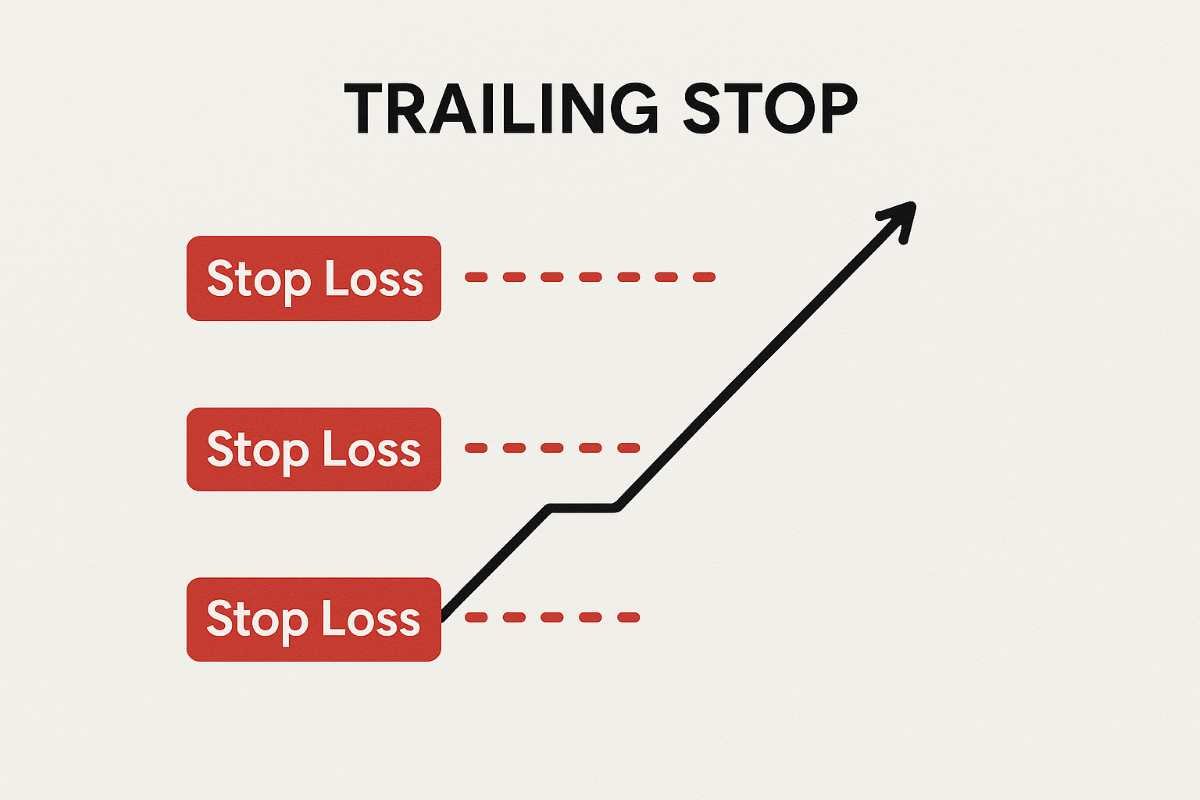
A Trailing Stop helps by automatically moving your stop loss (SL) in your favor as price moves your way.
Why Trailing Helps
- It can reduce taking profit too early
- It can help you keep more of a move when the market trends
How to Use It: Fix the Rules Instead of Deciding in the Moment
Trailing works best when you define it clearly:
- Start condition: when to begin trailing
- Trail distance: how far behind price the SL follows
- Update timing: every X pips / on candle close, etc.
EAs Help You Execute Discipline: They Remove Human Weakness by Design
Everything so far aims to reduce emotional interference.
An EA (Expert Advisor) strengthens that even more. An EA is not “a tool to make trading easy.”
Its real value is that it executes rules consistently.
Related article: What Is an EA? How FX Automated Trading Works and How to Choose One (Complete Guide)
The Weak Point Isn’t “Decision-Making”—It’s Consistency
Even if you know the rules, you can still break them:
- Increase lot size after losses (revenge)
- Widen stops (fear)
- Chase spikes (FOMO)
- Trade more and bigger after wins (overconfidence)
- Exit too early or hold too long (hesitation)
EAs Make Rule-Breaking Harder
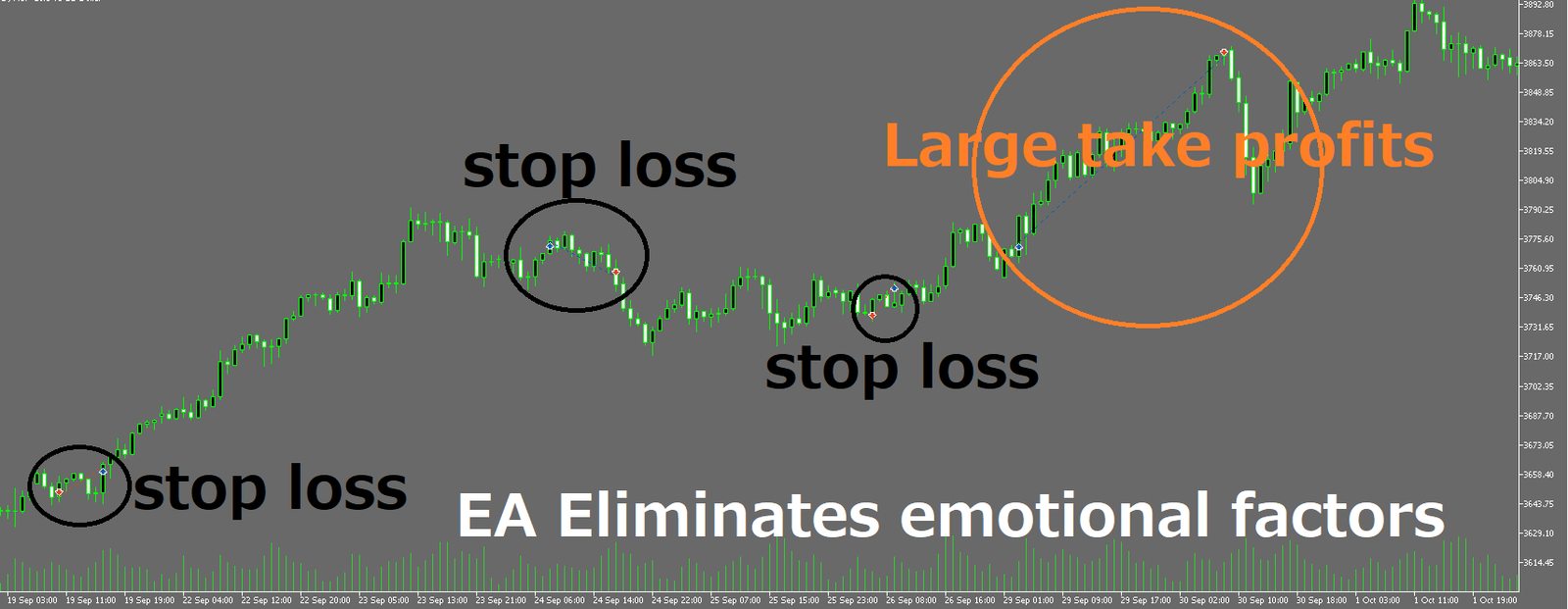
An EA won’t trade outside its logic.
- Fixed entries: trades only when conditions match
- Fixed position sizing: applies your risk rule (e.g., 1% per trade)
- Fixed exits: executes TP/SL (and trailing if needed)
- No emotional drift: doesn’t “get excited” or “get scared”
24/5 Consistency: The Same Flow, Repeated
Discretionary trading often changes with fatigue, stress, and time pressure.
EAs are better at running the same conditions and the same steps consistently—so they tend to have an edge in discipline.
Important: Discipline Alone Doesn’t Make You Profitable
EAs are strong at execution, but a strategy with negative expectancy still loses.
Automation only helps when you have rules with an edge and you run them without drifting.
EAs Also Help You Validate Expectancy: Backtest → Forward Test → Robustness Check
Another strength of EAs is that they make it easier to test whether your rules actually have expectancy.
You can test discretionary trading too, but it’s hard to avoid rule drift and hard to keep clean records. With an EA, rules stay fixed, so testing becomes more repeatable.
1) Backtesting: Quantify Expectancy on Historical Data
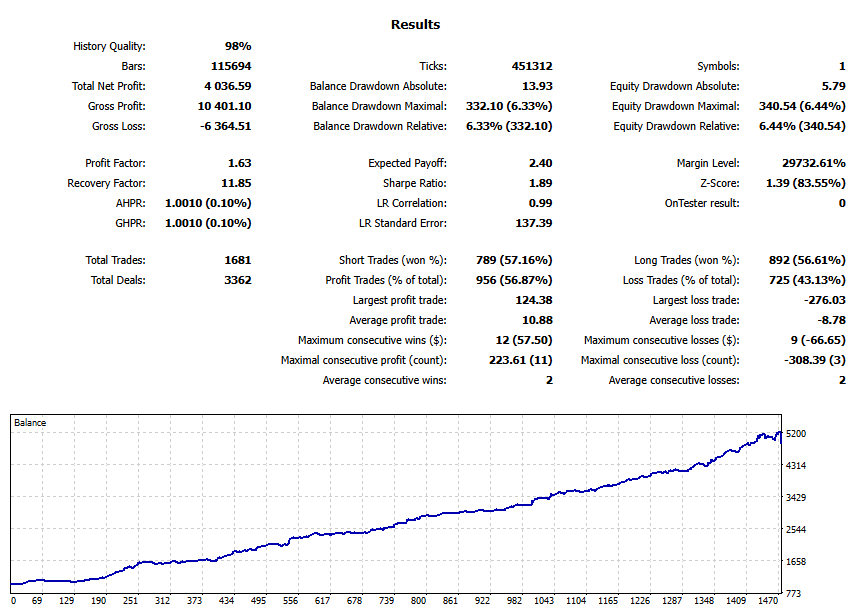
Backtesting applies your rules to past charts to see how they would have performed.
Focus on numbers that support repeatability—not flashy profit.
- Total profit/loss (even a profit needs a reason)
- Max drawdown (can you live with it?)
- Win rate, average win, average loss (expectancy inputs)
- Consistency of RR (risk-reward)
- Number of trades (too few = weak evidence)
- Equity curve bias (did one period do all the work?)
Related: How to Read MT5 Backtests: Verify EA Risk with Equity DD & Orders/Deals
2) Forward Testing: Confirm the Same Behavior in Live Markets
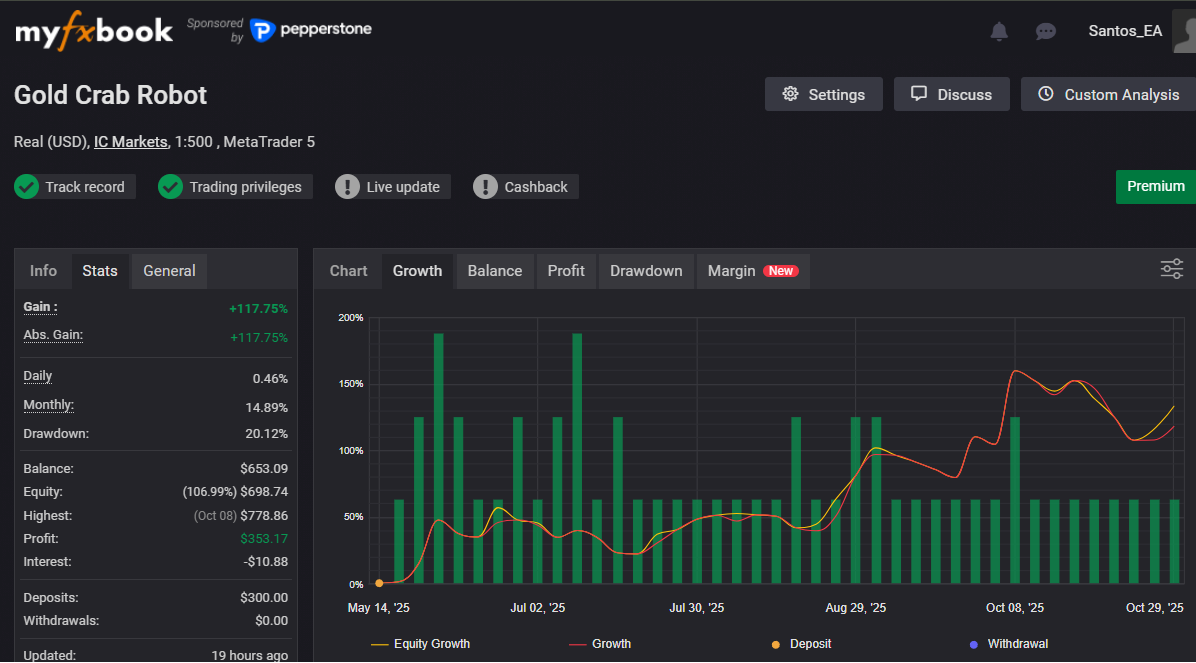
Backtests use the past. Forward testing checks your EA in current markets (demo or small size).
Short-term P/L matters less than whether the EA behaves the same way.
- Do entries and exits match expectations?
- Does it still hold up with spread and slippage?
- Do you see unexpected loss patterns around volatility spikes?
Related: How to Read Myfxbook: Spot Risky EAs (Balance vs Equity, Margin Spikes, Trade History)
3) Robustness Check: Does It Hold Up When You Change Conditions Slightly?
Even if the backtest looks good and the forward test is fine, you still want to see whether the strategy breaks easily.
That’s what a robustness check is for.
Related article: EA Robustness: How to Choose “Hard-to-Break” EAs (Pre-Purchase Checklist)
With an EA, you can run these tests quickly:
- Shift the period: does performance collapse in a different market phase?
- Shift the trading hours: does a small time change break it?
- Nudge parameters: do small SL/TP changes ruin it?
- Stress costs: does it still work with tougher spread/slippage assumptions?
The goal is not “perfect results.” It’s not getting killed by small changes.
Warning: Faster Testing Also Means Higher Overfitting Risk
Because EAs are easy to test, it’s also easier to overfit (curve-fit) a strategy to the past.
Overfitted settings can look amazing in backtests and fail later.
The better the backtest looks, the more you should insist on forward testing and robustness checks.
Related: EA Overfitting (Over-Optimization): How to Detect It Before You Buy
Summary: Discipline isn’t about willpower. It’s easier to maintain when you build it in this order:
risk cap → fixed exits → order patterns → automation.
EAs help not only with execution, but also with validation—backtest, forward test, and robustness checks—so you can run your strategy more consistently.
Conclusion: Protect an Edge With Systems
Trading results depend less on “being right” and more on your ability to repeat an edge without drifting.
If you change lot size, stops, or exits based on recent wins and losses, you’re no longer trading what you tested—and expectancy won’t show up.
Key takeaways:
- Without discipline, you can’t replicate expectancy (rule drift breaks results)
- Emotion is the main cause (revenge, greed, fear, FOMO, overconfidence)
- Start with a loss cap (fixed risk, fixed SL, RR design, calculated lot size)
- Fix entry and exit with order patterns (IFD-OCO, TP/SL set together)
- Reduce market orders and avoid chasing (use pending orders)
- Use trailing stops to systemize “letting winners run”
- EAs are strong at execution and validation (backtest → forward test → robustness check)
One last point:
Discipline isn’t something you “try” to keep. It’s something you protect with systems.
Start with a clear risk cap and fixed exits. Then standardize your orders and automate what you can. That’s the shortest path to turning expectancy into real-world results.
 MQL5
MQL5
 Myfxbook
 YouTube
 X
X
 GOGOJUN