

I’m looking for a “holy grail” in Forex—something that guarantees wins.
High win-rate EAs, signal tools that say “just follow the arrows”… which one is the real deal?

I get it. Most traders have been there. But the truth is, the more you chase a “holy grail,” the more risk you usually take on.
Markets don’t stay the same, and performance can look amazing depending on how it’s presented.
What matters isn’t finding a magic formula that “always predicts the future,” but building a testable edge (positive expectancy) and running it long-term with solid risk control and discipline.

Conclusion: There’s No Holy Grail—But There Is Hope
“Is there a holy grail in Forex?” This question never fully goes away. Even after years of trading, it still sits in the back of your mind.
It’s natural to want something that “works in any market” and keeps winning forever.
But here’s the reality: there is no one-shot strategy that wins in every market forever.
Markets keep changing (they’re not stable), and trading costs (spreads, commissions, slippage) constantly eat into results.
The harder you look for a perfect predictor, the more likely you are to waste time—and take unnecessary risks.
Why There’s Still Hope: Trading Isn’t About Perfect Prediction—It’s About Compounding
There’s hope because you don’t need perfect forecasts to grow your account over time.
The goal isn’t “100% win rate.” It’s to find a small, repeatable edge and compound it with risk control and discipline.
- Edge: even with wins and losses, the strategy tends to be profitable over the long run
- Risk management: the system is designed to survive drawdowns (DD) and losing streaks
- Consistent execution: you follow the rules and reduce mistakes so the expectancy stays intact
So you’re not looking for a “magic trick.” You’re building a system you can test, follow, and run for the long haul.
It may not look flashy, but it’s the most rational—and often the strongest—way to trade long-term.
How to Break the “Holy Grail” Mindset
The biggest reason people keep searching is simple: short-term performance can look extremely convincing.
A smooth equity curve (or a very high win rate) can hide a hard-to-see “blow-up risk”—a situation where one bad move wipes out months or years of gains.
That’s why it helps to switch to this mindset:
- No strategy is universal: every approach has market conditions it handles well—and conditions where it struggles
- Losing periods are normal: what matters is being profitable over the long run, not every week
- Be skeptical of “too perfect” results: they may rely on delaying stop losses or hiding risk in floating losses
- Check what’s behind the numbers: average win/average loss, max drawdown, recovery time, and the actual trade history
- Verify it still works after costs: spreads, commissions, and slippage must be included
Choosing this “boring but correct” path (testing + discipline) is what helps traders survive—and improve—in the real market.
Related: Trading Edge Explained: How to Build a Statistical Advantage in 4 Steps
Why Chasing a “Holy Grail” Is Dangerous (Changing Markets + Marketing Hype)
- Markets keep changing: price behavior doesn’t repeat forever. When conditions shift, what “worked” can stop working. No matter how good a strategy looks, it can’t predict the future perfectly forever.
- Performance can be made to look great: social media and ads often show only the best periods, while losses and deep drawdowns stay hidden. This is a classic survivorship bias problem. What you see is a highlight reel—not the full story.
It’s normal to be drawn to promises like “just do this and you’ll win” or “anyone can make X% per month.”
But that’s exactly where the trap is. Strategies without real repeatability can look like they work simply because they got lucky in the short run.
If you want to stay profitable long-term, you need to choose the less exciting option: the boring fundamentals.
That means testing, running a strategy with positive expectancy, following your rules with discipline, and managing the costs and risks that come with real execution.
Common Traps: Strategies That Look Like a Holy Grail
If you assume “smooth growth = safe” or “high win rate = good,” you can step on the most dangerous landmines.
Here are the typical patterns that look like a holy grail but often break down in long-term trading.
Don’t Mistake Grid/Martingale for a Holy Grail
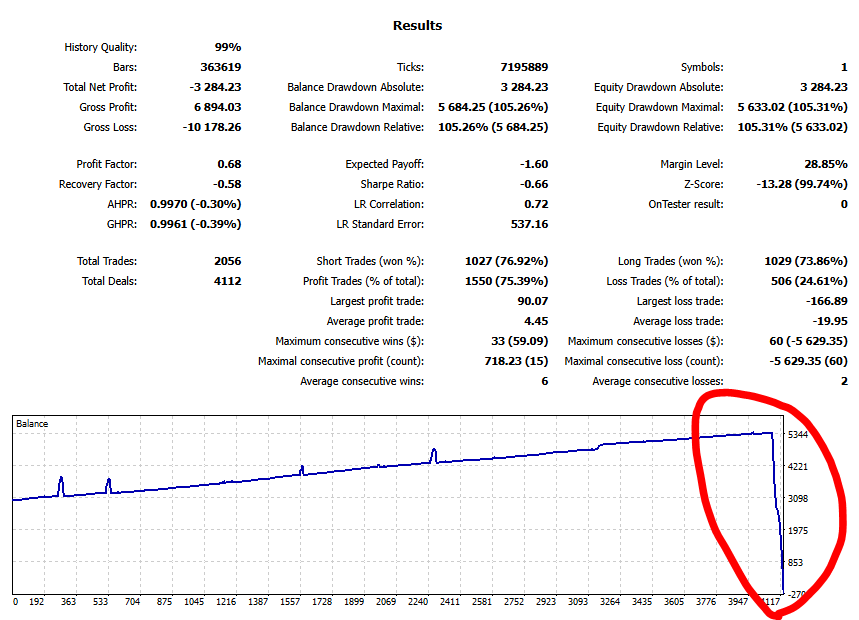
The smoother the curve looks, the more it may be hiding a sudden collapse.
Grid averaging (adding positions as price moves against you) and Martingale sizing can look great in ranging markets.
Profits stack up, and results appear “clean.”
But if price trends hard in one direction, floating losses can snowball, margin gets consumed, and the account can blow up in one move.
Related:
» Why Grid Forex EAs Blow Up: Hidden Drawdowns + Red Flags (Self-Made EA Test)
» Martingale EAs: Why They Blow Up (Backtest Proof + Checklist)
It’s Easy to “Never Lose” in Backtests (But It Often Fails Live)
A backtest is performance on past data.
If you tune a strategy to fit the past perfectly, it’s not hard to make it look strong in a report.
But when a strategy is over-optimized (overfitting), it often falls apart on a live account or in a different time period.
The real question isn’t “did it win in the test?”—it’s does it stay stable when conditions change?
Related: EA Overfitting (Over-Optimization): How to Detect It Before You Buy
Don’t Get Tricked by High Win Rates
A claim like “90%+ win rate” is tempting, but win rate alone tells you almost nothing about safety or long-term expectancy.
Many “high win-rate” systems achieve that number by taking huge losses occasionally or pushing losses forward until they become unmanageable.
At Minimum, Check These
- Expectancy (average P/L): does the average trade actually leave you positive?
- Profit Factor (PF): check it alongside win rate
- Max drawdown + recovery time: can one loss erase months of profits?
Related:
» Stop Chasing Win Rate: How to Evaluate Forex EAs with Expectancy, Risk-Reward & Drawdown
» FX Trading Expectancy (EV) Explained: EAs, Win Rate, Risk-Reward & Money Management
How to Spot Hype Ads
“Anyone can make X% per month,” but they never show the full history—this is a classic red flag.
Marketing highlights profits, but it often downplays risk.
Common tricks include cherry-picking short periods, ignoring commissions and slippage, and hiding the deep valleys in drawdowns.
Train yourself to look for what’s not being shown, not just what’s being advertised.
Don’t Try to Get Rich Fast
Wanting quick wins is normal. But speed often comes with fragility.
There is no holy grail that works in every market.
That’s why a better approach is to run a solid, positive-expectancy strategy for the long term and let the edge compound.
Watch Out for Signal Tool Hype (Short Version)
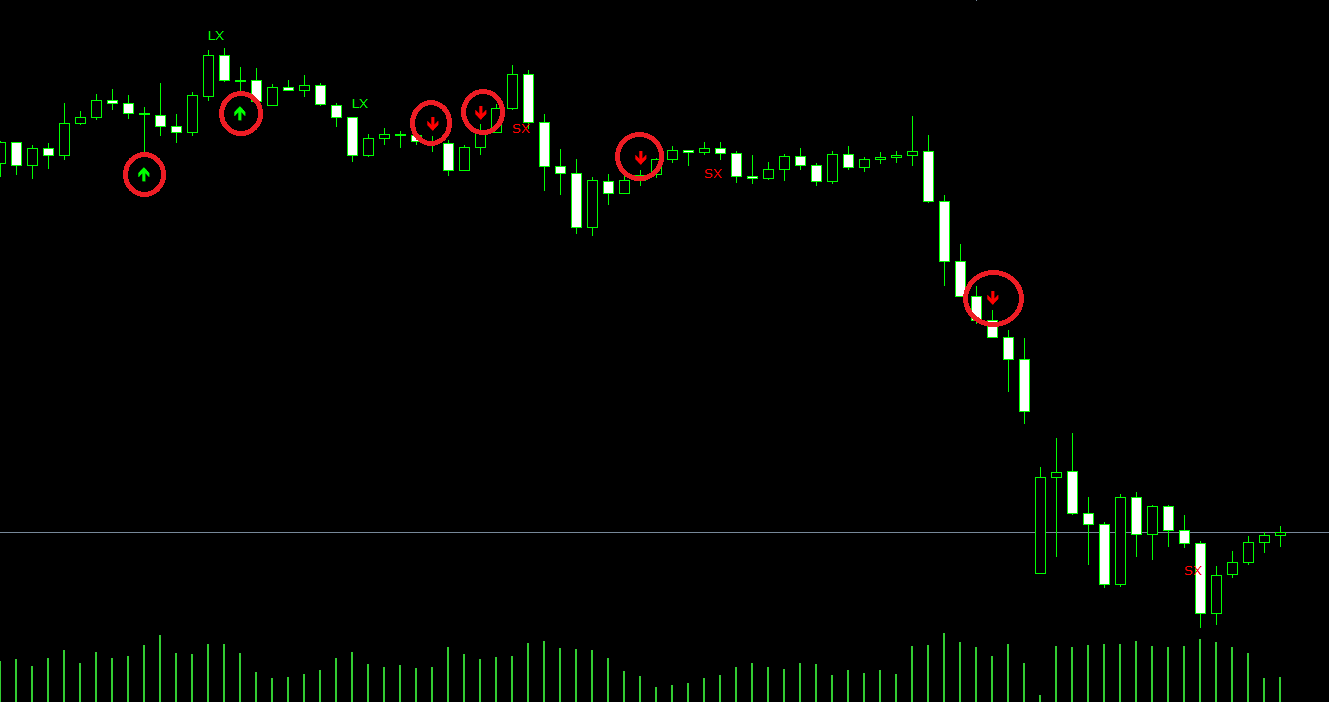
An arrow does not equal profit.
A signal is just a trigger. On its own, it’s not a full strategy.
Most signal tools fail because they don’t come with testable rules and real-world risk controls.
Why Signal Tools Often Don’t Hold Up
- Hard to test properly: arrows don’t define exits, stops, and profit-taking (so expectancy is unclear)
- Results depend on the person: traders choose whether to enter, where to stop, and how big to size
- Marketing bias: best-looking examples get posted; losing periods stay hidden (and repainting is sometimes an issue)
- Missing operating rules: sizing, pause rules, cost handling, and drawdown limits are often not defined
If You Use Signals, Turn Them Into a Strategy First
- Entry rules: signal + filters (time of day, volatility, trend conditions)
- Exit rules: take profit, stop loss, and “get out” conditions
- Position sizing: based on max drawdown tolerance (set a hard cap)
- Pause/reduce rules: losing streaks, drawdown limits, spread spikes, news times
- Test with real costs: variable spreads and slippage included
Related: Why Forex Signal Tools Often Fail: 3 Major Risks + The Path to EA Automation
Stop Chasing a Holy Grail—Run a Positive-Expectancy Strategy Long-Term
In the end, the path is simple.
Stop searching for a holy grail. Find a repeatable edge, then run it long-term with discipline.
That’s the most rational approach.
It may not sound exciting.
Because if you commit to the long game, you must accept one truth: you can’t eliminate losses.
Losses are part of trading, which means drawdowns (DD) will happen—and they can feel mentally tough.
But this is also why the approach works.
It shifts your focus from short-term wins and losses to compounding expectancy (EV) over time.
The Minimum Setup for Long-Term Trading
- A real edge (evidence from backtests/forward tests that results lean positive)
- Risk control that works (position size based on max DD, losing streaks, recovery time)
- Rules you can actually follow (including when to pause or scale down)
When you have these, trading stops being a “prediction game” and becomes system operation.
Why EAs Help: Testing + Discipline
You can trade this way manually, but in practice, EAs make it easier to reduce mistakes and stay consistent.
- Less emotion, more consistency: an EA can reduce human errors like chasing entries, hesitating on stops, or taking profits too early
- Faster test-and-improve cycle: you can test, adjust, and retest more efficiently
- Less execution drift: fewer issues from slow clicks, missed sessions, or panic during high-impact news
But an EA Is Not a Holy Grail
If there’s no edge, or if the design can blow up in one bad stretch, it won’t last—EA or not.
An EA isn’t magic. It’s a tool that makes testing and disciplined execution easier.
Related: What Is a Forex EA (MT4/MT5)? An Automated Trading Guide
Conclusion: Don’t Chase a Holy Grail—Compound a Testable Edge
There is no “one-shot holy grail” that wins in every market forever.
Markets change, and marketing can make performance look far better than reality.
That’s why the winning shift is simple: stop chasing flashy numbers and start building a small, repeatable edge—then run it with risk control and discipline over the long term.
You can’t avoid drawdowns, but you can treat them as planned setbacks and keep compounding expectancy.
- Look beyond win rate and smooth curves—focus on max DD, recovery time, and blow-up risk
- Be cautious with grid/martingale and “get rich fast” promises—watch for one-hit wipeout risk
- Signals are just triggers—turn them into rules and test them if you use them
- EAs help with testing and discipline, but an EA itself is not a holy grail
In the end, what lasts isn’t prediction skill. It’s the ability to run a durable system consistently.
Test it, set the rules, follow them—and let the edge do its job.
FAQ
- Q. Is there a “holy grail EA” that works in every market?
- A. No. Market conditions keep changing, so no logic stays unbeatable forever. The best approach is to run a positive-expectancy strategy long-term with strong risk control and discipline.
- Q. Aren’t grid and martingale strategies safe because they have high win rates?
- A. They can look safe, but many are built to fail under strong one-way moves. One trend can cause a large loss or account wipeout. Don’t judge by win rate—focus on max drawdown, recovery time, and blow-up risk.
- Q. Which metrics help you judge a “good EA”?
- A. Don’t rely on win rate. At minimum, check Profit Factor (PF), expectancy (average P/L), max drawdown, recovery time, and losing streaks, then confirm that results hold up in forward testing or other periods.
- Q. How much backtesting is enough?
- A. As a rule of thumb, test across multiple pairs and long periods, including uptrends, downtrends, and high-volatility phases. Make sure the test includes commissions, slippage, and variable spreads.
- Q. Can I make money by following a signal tool exactly?
- A. Many signal tools can’t be tested properly, and hype marketing is common. A signal is only a trigger. To trade it, you still need clear exit rules, position sizing, and stop/pause rules—plus risk management that you can follow consistently.
 MQL5
MQL5
 Myfxbook
 YouTube
 X
X
 GOGOJUN