

So what do you actually do in probability-based trading?
If you have a high win rate, you should win… right?

In short, it’s trading that focuses on “long-term profit (expectancy)” instead of “win or lose on this trade.”
Even with a high win rate, your account can still shrink if your losses are bigger than your wins.
That’s why you look at expectancy, risk–reward, and the number of trades (sample size) together,
to confirm you have a setup that tends to end up positive if you keep executing it.
But isn’t that kind of testing impossible by hand?
Checking hundreds or thousands of trades sounds brutal…
Exactly. Manually reviewing and logging thousands of trades is tough—both in time and mental energy.
That’s why turning your rules into an EA (automated trading) is so effective.
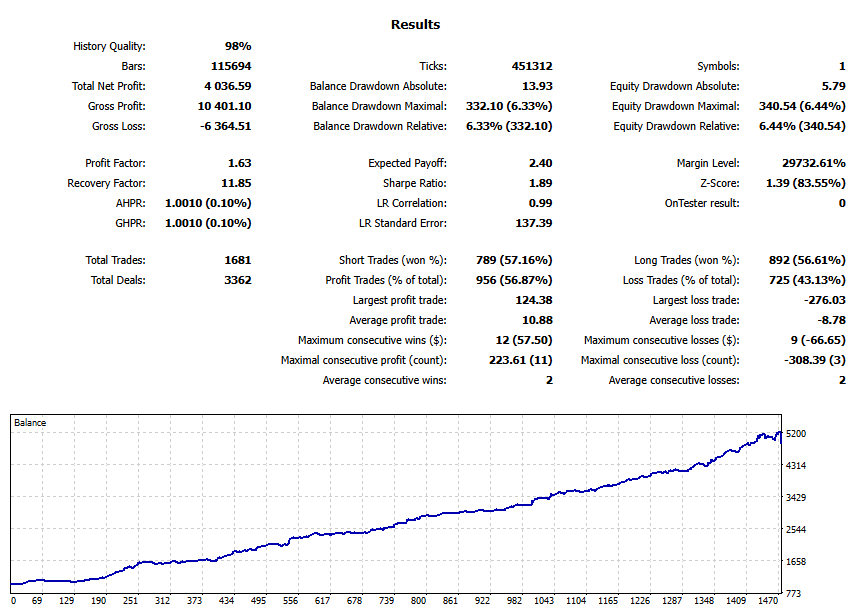
Once your rules are coded, you can run large backtests fast and check key numbers like
expectancy, max drawdown, and how losing streaks show up.
You stop guessing and start deciding with data. That’s the core of probability-based trading.

Introduction: The real reason your trading isn’t stable isn’t “the market”—it’s inconsistent decisions
You celebrate on winning days, then feel stressed all day after a loss.
You take profit early as soon as you see green, but you hold losers because “it’ll come back”…
That kind of inconsistency usually happens when you decide based on feelings in the moment, not probability.
Most traders don’t struggle because they lack techniques.
They struggle because their decision rules change every time (no repeatability).
That’s why you need a different mindset: not “I’ll predict the next move,” but probability-based trading (deciding by expectancy).
Pros care less about “predicting” and more about expectancy (a structure that grows over time)
Pros don’t try to nail the next trade.
They care about whether their account grows when they repeat the same decision many times (expectancy).
Weather forecasts don’t say “it will rain 100%.”
They say “70% chance of rain,” and bringing an umbrella is still a smart choice.
Insurance companies don’t predict each accident—they run a business using statistics.
Trading is the same.
When you can judge with numbers and probability instead of emotion, results become more stable.
If every win/loss ends with “luck,” “the market,” or “my mindset,” you’re likely to repeat the same mistakes.
What you’ll learn in this article
- Why you can lose even with a high win rate (and what matters more than win rate)
- How to reduce emotional trading (how to “systemize” your decisions)
- The basics of expectancy, variability (distribution), and sample size (no advanced math needed)
- How to build a strategy and manage risk (so you can keep executing it)
You don’t need advanced math.
What you need is to replace intuition with numbers that have reasons behind them.
Once you switch this way of thinking, trading becomes less like “guessing” and more like repeatable decision-making.
Related:
Stop Chasing Win Rate: How to Evaluate Forex EAs with Expectancy, Risk-Reward & Drawdown
FX Trading Expectancy (EV) Explained: EAs, Win Rate, Risk-Reward & Money Management
Why you can lose even with a 50%+ win rate: probability basics that win rate alone can’t explain
“I’m winning 60% of the time, but my account is still going down…”
This is a very common beginner problem.
The reason is simple: performance is not decided by win rate alone.
From a probability point of view, these two matter most:
- Risk–reward ratio: how big your average win is vs. your average loss
- Expectancy: how much you gain (or lose) on average per trade
Why a high win rate can still lose: your risk–reward is bad
Risk–reward means: for each trade, how much you risk losing versus how much you aim to make.
If this is poor (i.e., small wins, big losses), your account can bleed even with a high win rate.
It often looks like this:
- When you win: small profit (taking profit too early)
- When you lose: big loss (late stop / “holding and hoping”)
Simple example: the “numbers trick” where 60% wins still loses
Let’s compare two strategies with fixed amounts for clarity.
| Strategy | Win rate | Risk–reward | Loss per trade | Profit per trade |
|---|---|---|---|---|
| Strategy A | 60% | 1:0.5 | $100 | $50 |
| Strategy B | 40% | 1:3 | $100 | $300 |
Now assume 10 trades and calculate the total:
- Strategy A (6 wins, 4 losses):
( $50 × 6 ) + ( -$100 × 4 )
= $300 – $400
= -$100 - Strategy B (4 wins, 6 losses):
( $300 × 4 ) + ( -$100 × 6 )
= $1,200 – $600
= +$600
So, high win rate does not automatically mean profit.
If you judge by win rate alone, you can miss a losing structure.
The real key: expectancy (average profit/loss per trade)
Expectancy tells you whether your method is built to grow or shrink over the long run.
Expectancy formula:
Expectancy = (Average win × Win rate) - (Average loss × Loss rate)
Apply it to A and B (Loss rate = 1 − Win rate):
- Strategy A expectancy:
( $50 × 0.6 ) – ( $100 × 0.4 )
= $30 – $40
= -$10 - Strategy B expectancy:
( $300 × 0.4 ) – ( $100 × 0.6 )
= $120 – $60
= +$60
Conclusion:
Don’t get fooled by win rate.
First, confirm whether your strategy has positive expectancy.
Probability-based trading starts with a structure that is positive on average.
First step in probability-based trading: decide with “rules and numbers,” not emotions
The most important part of probability-based trading is not predicting the market perfectly.
It’s building repeatability—making the same decision under the same conditions.
In real trading, emotions jump in most when price moves fast:
fear, greed, and impatience can override your rules.
Once emotions take control, even a good strategy can lose its expectancy and become unstable.
This section shows how to switch from “trying to eliminate emotion” to building a structure that stays consistent even when you feel emotions.
Related: Emotions in Forex Trading: 7 Triggers That Break Your Rules (And How to Fix It)
Signs you’re trading emotionally
The more of these apply to you, the more likely emotions are driving your trades:
- You have a stop-loss rule, but you often delay it with “just a little longer…”
- You take profit early because you’re afraid the profit will disappear
- After a losing streak, you raise lot size or change rules to “win it back”
- You enter based on “it feels like it’ll go up/down” rather than a clear reason
- You don’t keep a trading journal, so you can’t review properly
These all mean your trading is led by mood instead of rules.
If your decision changes under the same conditions, results will naturally swing.
How probability-based traders think: replace emotion with “probability questions”
Probability-based trading doesn’t try to delete emotions.
Instead, you prepare simple questions that pull you back to rules when you feel tempted.
Here’s a beginner-friendly “switch template”:
| Situation | Emotional thought | Probability-based question (your script) |
|---|---|---|
| Before entry | “This is the moment! I’ll probably win!” | “Does this match my pre-set conditions? Does this setup have positive expectancy?” |
| At the stop | “It’ll come back if I wait…” | “Is this stop within my planned risk per trade?” |
| At profit | “I’m scared to lose this profit—close now.” | “Do I have a rule to exit here? Or am I cutting it short because I’m nervous?” |
| During a losing streak | “Maybe this strategy doesn’t work…” | “Is this streak within my tested range? Am I following the rules?” |
The point is not “remove emotion,” but use questions to reset your decision process.
Emotions create noise; probability questions bring you back to signal.
Three benefits when you start thinking in probability
- You stop getting tossed around by each win/loss
You focus on whether you executed a positive-expectancy process, which reduces stress. - You stop chasing 100% accuracy
Losses become a cost of doing business, which leads to faster stops and more stable results. - Less regret, better improvement
If you followed the rules, you can say “the process was right” even when the trade lost.
And because you can test and review, you improve faster.
Probability-based trading is not “mental toughness.”
It’s a system that keeps your decisions consistent.
Next, we’ll organize the three pillars behind that system: expectancy, variability, and sample size.
The basics: three must-know pillars—expectancy, variability (distribution), and sample size
To learn probability-based trading quickly, understand these three as a set:
- Expectancy: Does it grow over time?
- Distribution (variability): How much can results swing?
- Sample size: Have you taken enough trades to judge?
Once you get these, you’ll be less shaken by short-term wins and losses.
1) Expectancy: does your method have a “growth structure”?
Expectancy is the average gain (or loss) per trade.
In the end, trading isn’t about “predicting.”
It’s about whether your method is built to grow over many trades.
- Positive expectancy: you can still have losing streaks, but it tends to grow with repetition
- Negative expectancy: you may win sometimes, but it tends to shrink over time
Start by checking expectancy first, not win rate.
2) Distribution (variability): swings are guaranteed
Even with positive expectancy, your equity curve won’t rise in a straight line.
You will have ups and downs (drawdowns).
A simple example:
- Even with a 50% win rate, 10 trades won’t always be 5 wins / 5 losses
- You can easily see 2 wins / 8 losses, or 8 wins / 2 losses
- It’s like flipping a coin 10 times—streaks happen
How this helps:
- You can estimate a “normal” drawdown range (“this drop is expected”)
- You’re mentally ready for losing streaks (“a streak doesn’t mean the strategy is dead”)
Knowing variability helps you tell the difference between normal bad luck and a real breakdown—and prevents panic.
3) Sample size: don’t judge from 10 or 20 trades
With a small number of trades, “randomness” dominates.
It’s risky to label a method “good” or “bad” after only 10–20 trades.
This is where the Law of Large Numbers matters:
- The more times you repeat the same process, the more the average tends to move toward the “true average”
Trading version:
- Even with positive expectancy, your first 10 trades can easily be negative
- If you quit there, it might just be because the sample is too small
- As a rough guide, aim for at least 50–100 trades, and 200+ is even better
They work as a set: expectancy × variability × sample size
One alone is not enough:
- Expectancy without understanding variability makes you quit during normal drawdowns
- Variability without expectancy doesn’t tell you if the method grows
- Sample size without a decision rule gives you no basis to continue or stop
Probability-based trading means:
“Run a positive-expectancy strategy, expect swings, and execute enough trades for the edge to show up.”
The Law of Large Numbers: the “power of repetition” that makes trading more stable over time
Markets look random, but as you repeat the same process, results tend to move closer to the true average.
That idea is the Law of Large Numbers.
Once you understand it, you’re less likely to panic over short-term losses and streaks—and you gain the “ability to keep going” that probability-based trading needs.
The simplest explanation
- The more you repeat the same thing, the more the average tends to move toward the “real” average
Coin flip example: 10 flips swing, 1,000 flips settle
For a fair coin (50% heads):
- In 10 flips, getting 7 heads (70%) is totally normal
- But as you go to 1,000 or 10,000 flips, the ratio tends to move closer to 50%
- Streaks still happen, but the overall average settles
Trading version: short-term results aren’t reliable
In trading, the “true average” is your expectancy.
Example: your strategy has an expectancy of +0.5% per trade (on average).
- With only ~10 trades, you can easily be negative due to randomness
- Calling it “bad” at that point is like judging a coin after 10 flips
- As you increase the number of trades, results tend to move closer to the expectancy
The key message:
“A positive-expectancy strategy is more likely to show its real strength as you repeat it.”
Two conditions for the Law of Large Numbers to matter
It’s not magic. You need both:
- Your strategy must have positive expectancy
- If expectancy is negative, more trades means you lose more over time (like a casino game)
- → Without an edge, repetition won’t save you.
- You must survive long enough to execute enough trades
- With a small sample, randomness can hit hard
- That’s why risk management (not oversizing) is essential
- → If you blow up early, you stop before the edge can show up.
Important: it does NOT mean “you’ll win the next one”
Two common misunderstandings:
- “I’ve lost a lot, so I’m due to win next.”
- Wrong. A losing streak doesn’t change the next-trade probability.
- “If I keep going, I’ll definitely win.”
- The law says the average tends to settle with repetition—it doesn’t tell you when.
- That’s exactly why risk management matters.
In short, the Law of Large Numbers supports this idea:
“Run a positive-expectancy strategy with reasonable risk, and repeat it.”
This is not a get-rich-quick story.
It’s a long game where consistency tends to win.
Practical: how to build a probability-based trading strategy (simple 5 steps)
Now let’s turn the probability mindset into a real strategy.
One point matters most: don’t keep it as an idea—make it testable.
Step 1: start with a simple hypothesis
You don’t need a perfect theory.
Start with a rough idea of where you think you may have an edge:
- Example: “Buying pullbacks after a trend starts tends to work.”
- Example: “Breakouts after a new high tend to continue.”
No need for detailed numbers yet—just pick a direction.
Step 2: define rules so clearly anyone would trade the same way
Turn the idea into rules with no ambiguity.
At minimum, decide:
- Entry: when do you enter?
- Stop: where do you exit for a loss?
- Take profit: where do you exit for profit?
Simple example:
- Entry: price above a moving average, then buy the pullback
- Stop: exit if price breaks the recent swing low
- Take profit: target 2× the stop distance (e.g., 20 pips stop → 40 pips target)
Once you set stop and target, your risk–reward is mostly set (e.g., 1:2).
Step 3: test on past data and calculate win rate, risk–reward, and expectancy
Now check what would have happened if you followed the rules historically:
- Find past situations that match your rules
- Record win/loss and profit/loss in pips (a spreadsheet is fine)
- Calculate these three:
- Win rate
- Risk–reward (average win ÷ average loss)
- Expectancy (average gain per trade)
If expectancy is negative, go back and adjust Step 1–2.
Step 4: improve carefully—don’t over-tweak
If results are weak, improve with small changes:
- Raise win rate: tighten entry to reduce low-quality trades
- Improve risk–reward: extend targets or tighten stops (win rate may drop)
Keep it simple. Complex rules can break more easily later.
Step 5: set position size (lot size) last
Even a good strategy can die if you oversize.
A solid default rule:
- Risk only 1–2% of your account per trade
Example: Account $10,000, risk 1% ($100), stop 20 pips
- Dollar-per-pip = $100 ÷ 20 pips = $5 per pip
This makes it much easier to survive normal losing streaks and allow your edge to show up over many trades.
In short: idea → rules → backtest → small improvements → position sizing.
Note: to test realistically, automation is often better than manual work
You can do these steps by hand in theory.
But in real life, reviewing and logging hundreds or thousands of trades manually is extremely hard—both in time and mental energy.
And as you learned from the Law of Large Numbers, a strategy’s “real expectancy” becomes clearer only after a meaningful number of trades.
If your sample is too small, you’ll get pulled around by randomness and make bad decisions.
That’s where turning your rules into an EA (automated trading) helps.
With an EA, you can cycle through build → backtest → adjust much faster and secure enough sample size to judge your strategy properly.
Next, we’ll explain why EAs are such a strong match for probability-based trading.
Using system trading (EAs): the strongest tool to execute a probability-based approach
Probability-based trading isn’t complete with “good rules” alone.
You also need consistent execution, enough repetitions, and numeric verification.
Doing that perfectly by discretion is hard.
That’s why EAs (Expert Advisors) on platforms like MT5 are a practical option.
Related: What is an EA? How forex automated trading works and how to choose one
Why EAs fit probability-based trading: they secure “enough trades” and “consistency”
The true value of an EA isn’t flashy features.
It’s that it helps you meet the basic conditions probability-based trading needs: repeatability and sample size.
Reason 1: less emotional drift
- Human habits like taking profit too early or delaying stops are less likely to creep in.
- You reduce one of the biggest unknowns: “Did I really follow my rules?”
Related:Trading Discipline Explained: Protect Expectancy with Risk Caps, RR, Orders & EAs
Reason 2: faster testing cycles (this matters in real life)
- Manually checking thousands of trades is not realistic for most people.
- With an EA, you can backtest large samples quickly.
- You can line up numbers like expectancy, win rate, average win/loss, max losing streak, and max drawdown.
- It becomes easier to run the cycle: build → test → improve.
Reason 3: true repeatability under the same rules
- In discretionary trading, “the same setup” still leads to slightly different decisions.
- An EA applies the same rules the same way, enabling repeatable testing.
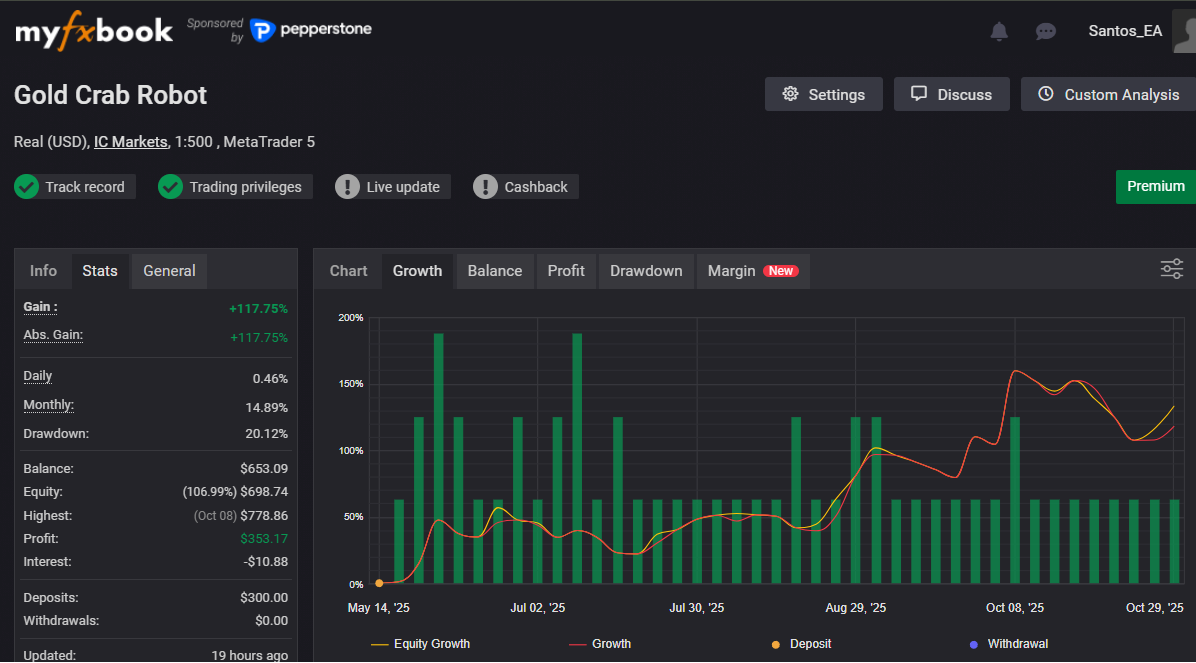
In short, EAs help you turn probability-based trading into a practical workflow:
design → test on history → validate in current conditions → execute consistently.
Important: an EA doesn’t “automate profits”—it automates execution
EAs are powerful, but they aren’t magic.
If your strategy has negative expectancy, an EA will execute it more precisely and faster (meaning it can automate losses).
Risk 1: over-optimization (overfitting)
- If you tweak too much just to improve backtest numbers, performance can break in the future.
(For details, see What is EA overfitting? How to spot it and a pre-buy checklist.) - How to reduce it:
- Test a long period (don’t judge from a short window)
- Check whether performance collapses when parameters shift slightly
- Run forward tests (demo/live-sim) as well
Risk 2: market regime changes
- Every strategy has strengths and weaknesses (range vs. trend, etc.). No EA is “universal.”
- How to handle it:
- Know what type of market your strategy is built for
- If performance worsens for a long time, separate “normal drawdown” from “regime change”
Risk 3: extreme moves and gaps
- Slippage and low liquidity can make stops fill far worse than expected.
- Your final defense is still position sizing (risk management).
Bottom line: An EA doesn’t replace thinking.
It’s a tool that executes your thinking consistently.
Used well, it helps you secure the “sample size” and “consistency” probability-based trading needs.
Related: Discretionary trading vs EA: which is better, and how to spot dangerous EAs
Position sizing (lot size) through probability: how to size trades in a way that keeps you alive
No matter how good your strategy is, if you run out of capital, it’s over.
As the Law of Large Numbers tells us, a strategy’s “real expectancy” only shows up after enough trades.
So the goal of risk management is simple:
survive long enough for your edge to play out.
Related:EA Lot Size & Position Sizing: Fixed vs Auto Lot, Risk % Rules, and Starting Deposit Math
Why sizing comes first: if you blow up early, you lose the profit you could have earned
Even a positive-expectancy strategy will have drawdowns.
If your size is too big, you risk this worst-case outcome:
your account dies before the edge has time to show up.
- A strategy can be positive, but early losing streaks can cut your account too deeply
- If you can’t continue, you can’t collect the expectancy you could have earned
In probability terms, sizing isn’t just “how to maximize profit.”
It’s how to protect your right to keep executing.
The simple rule: risk only 1–2% per trade
For most beginners to intermediates, this is enough:
- Rule: Set your maximum loss per trade to 1–2% of current equity
Two-step calculation
Risk amount = Current equity × 0.01 (or 0.02)Position size ($/pip) = Risk amount ÷ Stop size (pips)
Example: Equity $10,000, risk 1% ($100), stop 20 pips
$/pip = $100 ÷ 20 pips = $5 per pip
This makes it much harder to lose your ability to keep trading during normal losing streaks.
Think sizing and drawdown together: drawdowns are also “probability ranges”
When you size, don’t look at expectancy alone.
Also consider likely drawdowns—because oversized drawdowns break you mentally, even if you can afford them.
A practical approach:
- Check backtests for max drawdown and max losing streak
- Size so you can survive that range (if needed, reduce from 1% to 0.5%)
The target isn’t “the lot size that earns the most.”
It’s the lot size you can keep running.
Don’t panic in losing streaks: drawdown management with probability (normal vs. abnormal)
From a probability viewpoint, drawdowns are a cost of execution.
The real problem isn’t drawdown itself.
It’s drawdown so large that you can’t keep going.
Drawdown isn’t proof your strategy is wrong—it’s a normal swing
Even high win-rate strategies can hit losing streaks.
Just like a coin can land tails many times in a row, short-term clustering happens.
So don’t ask “Did I lose?”
Ask: Is this loss pattern within what I planned for?
Related:EA Drawdown (DD) Explained: How to Read MT5 Reports, Focus on Equity DD, and Set a Risk Limit
Turn “unknown” into “known” with backtest ranges
Know these before you trade:
- Max drawdown (Max DD)
- Max losing streak
- Typical drawdown
Once you know them, your decisions become calmer in real drawdowns.
When you hit a losing streak, check only these three things
- Is this streak/drop within the tested range?
Example: if max losing streak was 7 and you’re at 5, it’s still “possible.” - Am I following the rules exactly?
If yes, it may be normal noise. If not, the problem is execution. - Is my sizing designed to survive the expected drawdown?
If not, you can blow up before collecting the edge.
Drawdown management is not “endure it.”
It’s adjusting so you can keep executing.
Pitfalls of probability: don’t overtrust past data, and don’t ignore black swans
Thinking in probability makes trading much clearer.
But you must avoid one trap: believing past numbers too much.
A great backtest does not guarantee the future.
Past performance doesn’t guarantee future performance (markets change)
Backtests matter, but they’re not perfect.
Market conditions change over time: participants, costs, liquidity, volatility, rules, and behavior.
A pattern that worked years ago may stop working now.
Black swans: rare but huge events don’t fit neatly into models
Probability and statistics handle “known risks” well—things that have happened before.
But rare disasters (sharp gaps, extreme volatility, market stress) can’t be fully captured by past data.
In those moments, defensive design matters more than theory.
Conclusion: Probability is a powerful ally, but it has blind spots.
That’s why your final layer of safety is simple: keep position sizes modest and don’t bet everything on one idea.
And if you want something that can still work in the future, prioritize generality and robustness—not just pretty backtest numbers.
The more “hard to break” a strategy is when conditions change, the longer you can benefit from its edge.
Related: EA robustness: how to choose EAs that don’t fall apart (and a pre-buy checklist)
Probability doesn’t predict the future: it helps you lose less in an uncertain world
The goal of probability-based thinking isn’t to “call the next trade.”
It’s to keep making decisions that tend to work over many trades.
Probability gives you “reasonable decisions,” not prophecy
Weather forecasts don’t promise rain.
They give probabilities that help you decide.
Same in trading.
A probability-based trader doesn’t think “this trade will win.”
They think:
“In this condition, my tested expectancy is positive. So it’s worth participating.”
You can make the right decision and still lose (and that’s fine)
This is painful but essential:
- You entered by your rules and stopped out by your rules.
- Then price reversed—if you had held, it would have been a big win.
That doesn’t automatically mean your decision was wrong.
In probability, good decisions can lose sometimes.
What matters is not one result, but whether repeating the same decision leads to profit over time.
When you judge yourself by “did I follow the rules?” rather than “did I win?”, you gain stability.
Because you don’t know the future, rules and risk management become your edge
No one knows what will happen next.
That’s why you:
- Keep size small to survive
- Use rules to reduce hesitation
- Test to confirm expectancy
Probability isn’t magic. It’s a framework that helps you survive uncertainty and grow over the long run.
Summary: how to evolve your trading from “luck” to “strategy”
Trading itself isn’t gambling.
But if you trade on unsupported intuition and moment-to-moment emotion, it becomes gambling.
Probability-based trading turns “luck-based actions” into repeatable decisions backed by numbers—in other words, a strategy.
Key takeaways
- Win rate alone doesn’t make you profitable: focus on expectancy and risk–reward
- Swings are normal: losing streaks and drawdowns are part of the game
- The edge needs repetitions: don’t judge from a tiny sample
- Risk management is the foundation: if you blow up early, you never collect the edge
- Don’t overtrust the past: markets change, and humans misread data
Probability isn’t a tool to predict the future.
It’s a framework to keep making decisions that reduce damage and build long-term growth.
So focus less on “the next win,” and more on building a process you can keep running.
FAQ: common questions about trading and probability
- Q. Why can you profit even with a low win rate?
- A. Because if your average win is larger than your average loss (good risk–reward), you can be profitable with a lower win rate. What matters is expectancy: the balance between (average win × win rate) and (average loss × loss rate).
- Q. How much math do I need for probability-based trading?
- A. You don’t need advanced math. If you understand percentages and basic arithmetic, you’re fine. Start by being able to calculate expectancy: (average win × win rate) − (average loss × loss rate).
- Q. Why does a strategy look good in backtests but fail in live trading?
- A. Three common reasons: (1) overfitting to the past, (2) real-world costs (spread, commissions, slippage), and (3) execution drift (emotion and mistakes). After backtesting, it’s safer to run a forward test on a demo before risking real money.
- Q. How long does it take to develop probability-based thinking?
- A. It’s less about time and more about trade count. Start by logging and reviewing 50–100 trades so you can “feel” what normal swings look like.
- Q. What percent should I risk per trade?
- A. A practical guideline is 1% (and up to 2% once you’re experienced). The goal is to survive losing streaks and keep executing long enough for expectancy to work.
- Q. Is probability-based trading better for day trading or swing trading?
- A. It works for both. The key difference is how quickly you can collect a sample size. Day trading often gathers trades faster, but swing trading can work fine with enough time, testing, and sizing.
- Q. What should I do when I hit a losing streak?
- A. Check only three things: (1) is it within the tested range? (2) did you follow the rules? (3) is your size small enough to survive? If all three are fine, treat it as “normal noise” and keep executing.
 MQL5
MQL5
 Myfxbook
 YouTube
 X
X
 GOGOJUN