

So with an FX signal tool… can you really win just by entering exactly where the arrows tell you?

Conclusion: It’s hard to win consistently with only that.
A signal tool is a support tool that shows “buy/sell cues,” and in many cases you still place and close trades manually.
That leaves room for hesitation, greed, and fear to creep in, which can break your discipline and make results unstable.
Also, many tools are hard to verify with backtests/forward tests because of issues like repainting or vague rules, and they can be easily abused in exaggerated marketing.

Introduction: The “easier it looks,” the more careful you should be with FX signal tools
“Just enter when the arrow appears.” “Anyone can win easily.” — FX signal tools marketed this way can feel especially tempting for beginners. If all you have to do is follow arrows on a chart, it sounds like you can win without deep analysis or experience.
But in reality, signal tools have several structural weaknesses. If you use them casually, they can lead to serious losses.
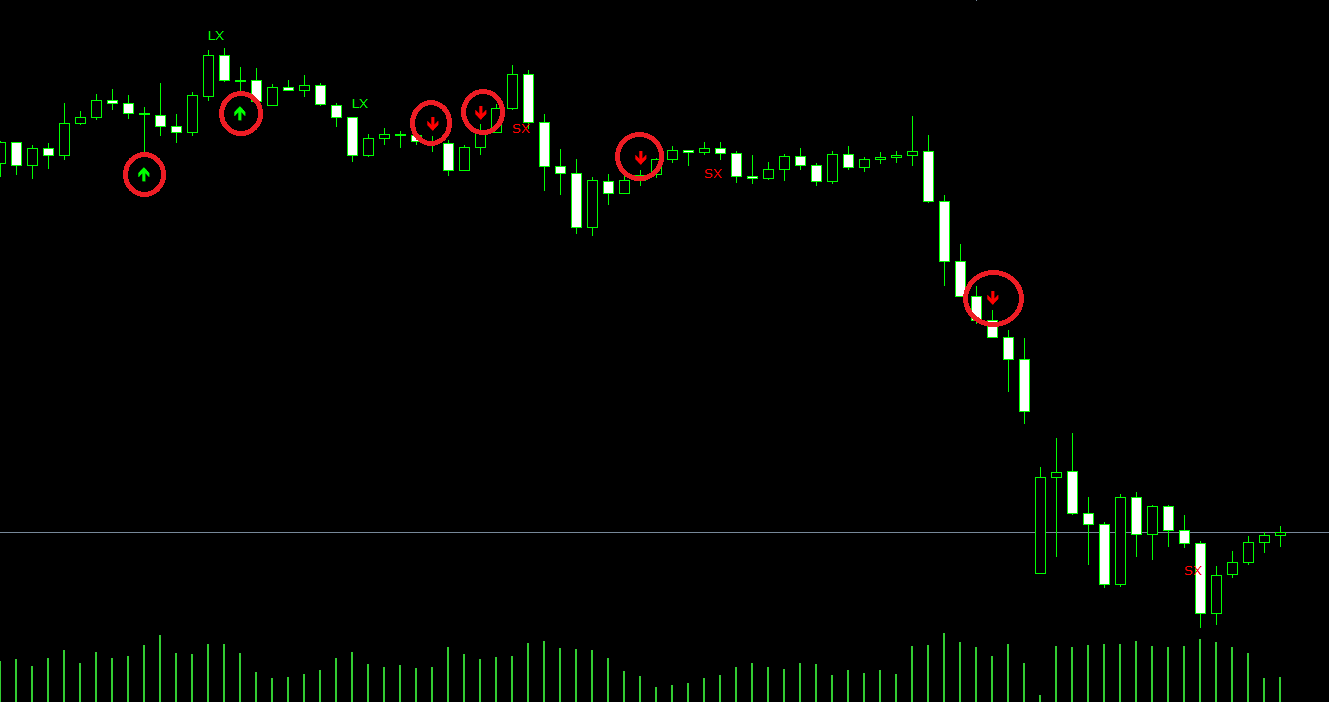
The “three core risks” hidden inside signal tools
- 1) Hard to verify (almost impossible in some cases)
If the trading rules are vague, or past signals change later (repainting), then objective evaluation and backtesting can become difficult. - 2) Discretion creeps in, and discipline breaks easily
Even with the same signal, a human decides “enter or skip,” “take profit or cut loss,” and “lot size.” Emotions and hesitation can easily distort results. - 3) Easy to misuse for hype or scam-like sales
It’s easy to show flashy “results” like “90% win rate,” and tools can sell even without solid verification data. That makes this area prone to trouble.
What you’ll learn in this article (beginner-friendly)
This article breaks down the key points as clearly as possible so even FX beginners can judge properly:
- How FX signal tools work (what they can and can’t do)
- Common risks (verification, discipline, and misuse)
- What to check before buying (how to spot red flags)
- How to shift toward “verifiable trading” (including options like EAs)
By the end, you should be able to judge signal tools based on evidence, not just “vibes.”
What is an FX signal tool? How it works, what it can do, and what it can’t
An FX signal tool is a decision-support tool that shows “buy” and “sell” timing on a chart using things like arrows, alerts (notifications), or color changes.
In simple terms, it’s a guide that says, “You might want to consider buying (or selling) here.” The big appeal is that it’s visually easy to understand, even if you’re not confident in market analysis.
How does it generate signals? Common logic behind the alerts
Signals don’t appear “randomly.” The tool displays them when preset conditions are met. Common examples include:
- Technical indicator conditions: moving average crossovers, RSI overbought/oversold, MACD turns, etc.
- Price level triggers: support/resistance, recent highs/lows, round-number levels, etc.
- Session/time and volatility conditions: London/NY sessions, sharp moves (high volatility), etc.
So the mechanism is straightforward: “condition met → show a signal.”
Important: A signal tool does NOT execute trades automatically
This is where many beginners get confused. Most signal tools only show arrows and do not automatically place or close trades (TP/SL).
Even if a signal appears, you make the final call
After a signal shows up, the following decisions are left to you (the trader):
- When to enter (enter immediately / wait / skip)
- How to enter (market / limit / allowed slippage, etc.)
- Position size (lots) (money management and risk settings)
- Where to take profit / cut loss (TP/SL placement, trailing stop, etc.)
Bottom line: A signal tool is a “guide,” not an automated trading EA
Signal tools may look convenient, but key factors that decide your results—entries, exits, and position sizing—often depend on the human operator.
That “human-in-the-loop” structure leads directly to the later problems we’ll cover: hard-to-verify performance and discipline breakdown risk.
Related articles:
»What is an EA? How FX automated trading works and how to choose one
»Discretionary trading vs EA (automated trading): which is better?
The fatal flaw: manual execution makes results inconsistent (lower reproducibility)
A signal tool is only a guide that says, “You might want to buy/sell here.” Since a human places and closes trades, results can change even when the tool shows the exact same signal.
That separation between “signal display” and “trade execution” is the biggest weakness of signal tools—and a major reason beginners struggle.
The same signal, different outcomes: the “execution drift” trap beginners fall into
Even if a signal appears, small differences like these can quickly add up and distort performance:
- Missed signals: a signal appears while you’re away from the chart
- Late entry: hesitation makes you enter at a worse price
- Taking profit too early / cutting losses too late: emotions shift your exit timing away from your rules
- Changing lot size: you size up after a winning streak, then size down after losses (results get warped)
The gap between ideal and reality: common examples
| Ideal execution | What often happens in real life |
|---|---|
| Enter immediately when the signal appears | “I’ll wait a bit” → enter late or miss it |
| Exit mechanically at preset TP/SL | Take profit early, delay stop-loss |
| Trade with rule-based position sizing | Emotion-driven sizing up/down |
Why reproducibility drops: you can no longer measure the tool’s real edge
If entries, exits, and lot sizes change from person to person, results reflect less of the tool’s quality and more of the trader’s decisions.
That creates problems like:
- You can’t evaluate the tool accurately (you don’t know if it truly works)
- You can’t identify why you lost (was it the tool, or your execution?)
- You “fix” the wrong thing (you keep buying new tools when the real issue is discipline)
Bottom line: Even if a signal tool looks “easy,” your results depend heavily on your discipline, decision-making, and risk management. Beginners should understand this structure before using one.
Signal tools are hard to validate: why backtests and forward tests often don’t hold up
The most important thing in any trading strategy is being able to confirm with data whether it really works (verifiability).
But with FX signal tools, due to how they’re built, it’s common for backtesting and forward testing to be difficult—or for the results to be unreliable even if you try.
Why is verification so difficult? Four barriers beginners should know
1) Repainting: past signals change later (it becomes “after-the-fact”)
Repainting means a signal shown in the past can disappear or move later.
On historical charts, this can look “perfect,” but the signals you see later are not the same signals that existed in real time. That “beautifies” the past and hides the true performance, so you can’t know the real edge.
2) Vague rules: exits aren’t defined in numbers
Many tools show entry arrows, but don’t clearly define where to take profit or cut loss.
If exit rules are unclear, different people will trade the same signal differently, which means you can’t reproduce results under identical conditions. That breaks verification.
3) No full history: you can’t access every past signal
For “broadcast-style” tools (signals generated on a server and displayed to users), you may not be able to obtain the complete signal history.
Without full history, you can’t backtest comprehensively. You also can’t rule out the possibility that the seller is only showing “convenient” examples.
4) Human-controlled exits: you can’t produce consistent test results
Since signal tools don’t execute trades automatically, decisions like TP/SL, moving stops to breakeven, partial exits, and more depend on the trader.
That means an arrow alone doesn’t lock in the trade record needed for testing—where you entered and where you exited. As a result, it’s hard to create comparable test results.
What goes wrong when you can’t verify? Key metrics become impossible to calculate
When the issues above exist, it often becomes hard to calculate essential trading metrics objectively, such as:
- Win rate: how often the strategy wins
- Risk-reward ratio (R:R): the balance between average gain and average loss
- Profit factor (PF): overall profitability
- Maximum drawdown (DD): the largest expected equity drop
Bottom line: an unverifiable strategy hides your worst-case risk
If you can’t verify it, you can’t see your maximum downside.
Before you commit money, make “Can I verify this in a reproducible way?” your top priority. If verification doesn’t hold, the strategy rarely becomes a stable long-term foundation—no matter how attractive it looks.
Discretion breaks discipline: signal tools are heavily affected by psychology
Most signal tools only show arrows (signals), while humans handle real entries and exits.
In that gap between the signal and the execution, emotions—fear, greed, anxiety—can slip in. Rules break, you stop trading as intended, and performance becomes unstable.
Related article:
Emotions in Forex Trading: 7 Triggers That Break Your Rules (And How to Fix It)
Psychology patterns that often hit at entry (common beginner traps)
- “I want a slightly better price.” → price moves while you wait → you miss the trade or enter late at a worse level
- “This signal feels suspicious.” → you skip without evidence → you miss the winners
- “I lost last time, I want it back.” → you increase lot size → risk spikes
Psychology patterns that often hit at exit (TP/SL)
- You take profit quickly after a small win → profits don’t grow, and overall results suffer
- You can’t cut losses when you’re down → losses expand, equity can drop fast
- You change the rules after the fact → your verified rules and real trading become two different things, so results don’t stabilize
The danger peaks during drawdowns: the “negative loop” of broken discipline
The riskiest moment is during losing streaks or drawdowns. Pressure rises and you can slip into a cycle like:
- Loss avoidance (not wanting to “lock in” a loss) → delay stop-loss → small losses become big losses
- Revenge trading → larger lots / more trades → risk management collapses
- Blaming others / self-justification → “It’s the tool’s fault” → no improvement → repeat the same mistakes
Why “it should win” becomes “I keep losing” (how expectancy breaks down)
Signal-tool users often lose not because the idea is always bad, but because execution drift destroys expectancy.
- Small losses / big wins gets flipped: early TP + late SL worsens your risk-reward
- Results depend on the trader, not the tool: discretion skill ends up deciding everything
- Consistency drops: losses trigger stopping, rule changes, and a mismatch between testing and live trading
Bottom line: Signal tools can look simple, but psychology, discretion, and discipline strongly shape outcomes. Beginners should prioritize clear, reproducible rules and verifiability over flashy presentation.
If it truly works, it should be an EA: why isn’t it automated?
A verifiable, reproducible strategy usually has rules that can be coded into numbers and implemented as an EA (automated trading system).
Automation makes it possible to backtest on historical data and run the exact same rules mechanically—so you can prove with data whether it actually works.
So why are so many signal tools not turned into EAs (or not easily turned into EAs)? Once you understand this, your ability to judge signal tools improves dramatically.
Why automation strengthens verification
- You can backtest: test identical conditions on historical data and confirm expectancy in numbers
- Forward testing becomes easier: step-by-step checks (demo → small live) help validate future reproducibility
- You remove emotional drift: you reduce the “fear/greed/hesitation” problem that breaks rules
- You can explain key metrics: win rate, PF, max DD, and more can be shown as evidence
Three core reasons signal tools often don’t become EAs (beginner-friendly)
Reason 1: It won’t survive real verification (testing exposes weaknesses)
Some signal tools rely on repainting or other display tricks that make charts look “accurate.”
If you code those into an EA and test them strictly, the weaknesses often show up fast—poor performance or unstable results—which makes selling harder.
Reason 2: The rules are too vague to automate (discretion is assumed)
“If the arrow appears, enter, but TP/SL depends on the situation.” “There are lots of exceptions.” “Adjust it with discretion.”
If rules aren’t fixed in numbers, you can’t code them into an EA.
And the more vague the rules are, the easier it becomes to say, “It depends on how you use it,” when results are bad.
Reason 3: They want to avoid performance transparency (numbers reveal limits)
If you automate and publish backtests/forward tests, people will see not only the good parts but also the uncomfortable parts—maximum drawdown, losing streaks, and ugly periods.
The more data you show, the harder it is to sell with hype. That’s why some sellers avoid EA conversion and avoid publishing hard numbers.
Why “room for discretion” often benefits the seller
- Easy to shift blame: if it fails, they can say “your execution was wrong”
- Easy to make excuses: without objective data, convenient explanations can sound believable
- Easier to upsell: “premium version,” “another tool,” “course,” and other add-ons are easier to pitch
Bottom line: a powerful filter is “Can it be automated into an EA?”
If a method truly works and the rules are clear, you can automate it, test it, and show the data.
If the explanation becomes vague the moment you ask about automation, there’s no test data, and the rules aren’t numeric—treat it as a red flag.
Why signal tools are easy to exploit: how to spot trouble before you lose money
Signal tools can look convenient, but they’re also a space where exaggerated marketing and scam-like sales happen often.
The reason is simple: signal tools are hard to verify and easy to make look impressive, so it’s easy to sell something that “seems legit” to beginners.
Below are common abuse patterns and simple points to check before buying.
Why is abuse so common? Five typical reasons
- Easy to make historical charts look perfect: repainting can create a “past that looks accurate”
- Easy to cherry-pick winning examples: they can hide losing periods and show only favorable moments
- It sells even without verification data: vague rules can still sell based on “feel”
- Scarcity pressure works well: “limited time” / “few spots left” can push beginners into quick decisions
- It pairs well with broker referrals: affiliate rewards can become the real goal, not tool quality
Common tricks and pre-purchase checkpoints (don’t skip these)
[High risk] Signs of possible repainting (“after-the-fact” signals)
- Past arrows look too perfect (oddly few losses / too many consecutive wins)
- Signals appear later that weren’t visible in real time (your impression changes during testing)
- They can’t provide full signal history (CSV, etc.) or a reproducible testing method
Key point: “A chart that looks too clean” doesn’t prove a good tool. It can be a warning sign.
[Be careful] The main topic is account opening and deposits (the goal looks off)
- They talk more about “bonuses” and “campaigns” than the tool’s logic
- It only works if you open an account at a specific broker, and the sales flow strongly pushes you there
Key point: If the pitch focuses more on “broker benefits” than “how the tool wins,” the seller may be prioritizing affiliate commissions.
[Warning] Heavy pressure and “limited-time” hype (they don’t want you to think)
- They repeatedly push “today only,” “few left,” “ends tonight”
- Refund terms are extremely strict or effectively impossible (e.g., only within a very short time)
- If you hesitate, they keep offering discounts and extra bonuses to rush you
Key point: A truly strong product can compete with verification data, not hype.
Minimum checklist before buying (beginner-friendly)
- Can they explain non-repainting clearly and specifically? (“It doesn’t repaint!” is not enough.)
- Can they provide full signal history (CSV, etc.) so you can verify it?
- Do they disclose performance including time period, risk, and maximum drawdown (max DD)?
- Can they publish results on a third-party service (e.g., Myfxbook, MQL5 Signals) to prevent manipulation?
- Are the rules—especially exits (TP/SL)—written in numbers?
Bottom line: Choosing a signal tool based on “feel” is dangerous. Before buying, prioritize whether you have enough material to verify it.
Alternative: move toward “verifiable trading” with an EA (but don’t blindly trust automation)
The biggest weakness of signal tools is that verification and reproducibility (getting similar results under the same conditions) are hard.
A practical option to address this is using an EA (automated trading system). Because EAs turn rules into code, you can evaluate them more easily with backtests and forward tests—as data.
Four benefits of using an EA (how it differs from signal tools)
- You can evaluate quantitatively: measure win rate, risk-reward (R:R), profit factor (PF), max drawdown (DD), and more
- It’s easier to build a testing process: backtest → demo → small live makes reproducibility checks more realistic
- Execution stays consistent: less emotional drift; easier to follow rules for entries/exits
- You can systematize risk control: you can build in stop rules (max DD, losing streak limits) and loss caps
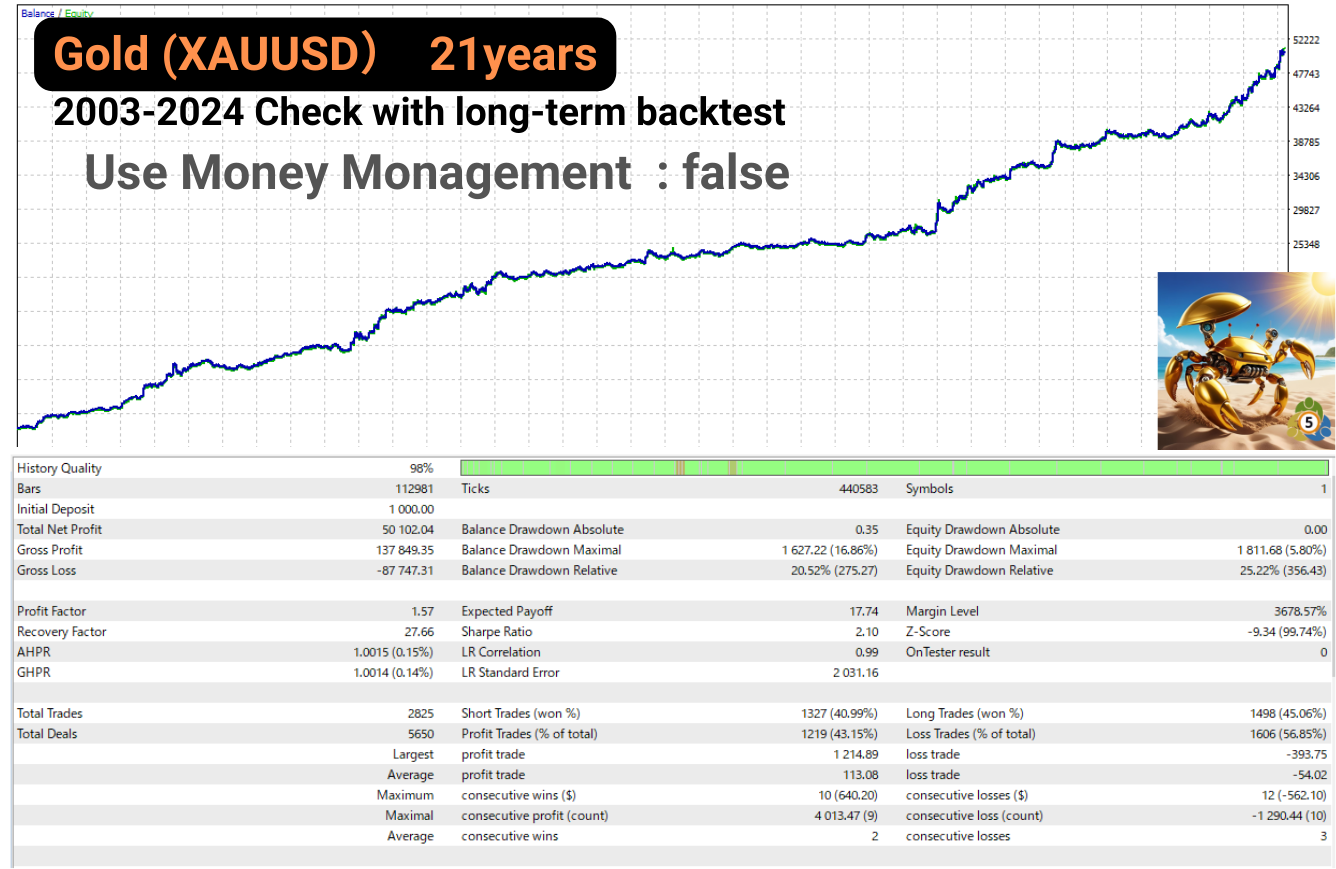
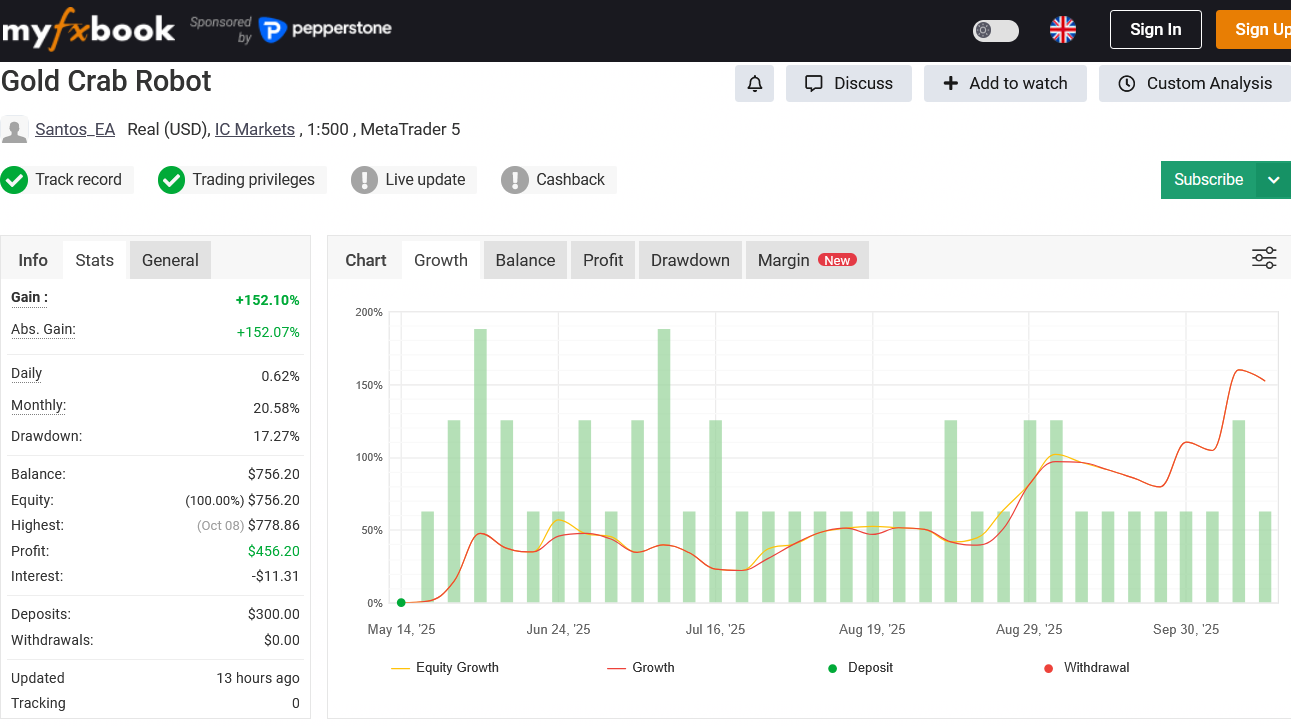
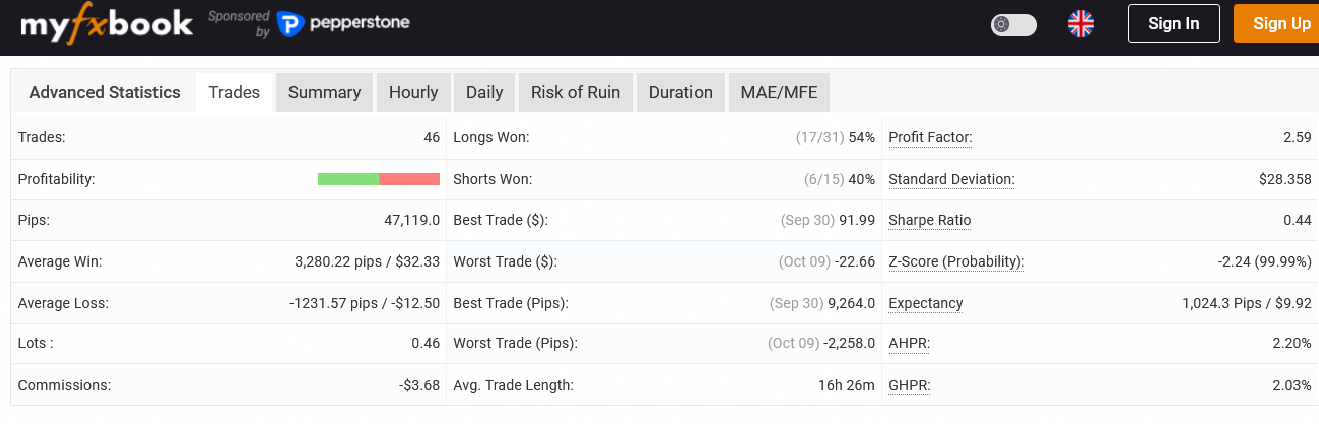
Example: checking verification data (backtest and forward test)
With an EA, you can check backtests (historical) and, if the developer publishes it, forward tests (live performance).
That lets you compare historical test behavior with real trading reproducibility.
Important caution: hype exists with EAs too (“automated” doesn’t mean “safe”)
This matters. Overhyped and dangerous EAs do exist.
- Be cautious with overpriced EAs or sales pages that push “limited,” “guaranteed wins,” or other weak claims
- If the win rate looks unnaturally high (e.g., “almost never loses”), treat it as a warning sign
- If the equity curve looks too perfect or drawdown looks almost nonexistent, be extra careful
└ Some systems hide risk by holding large floating losses (grid/averaging down, martingale, etc.) and only look “clean” on the surface - In some cases, you could lose most of your account in one blow (sharp market moves + increasing lots + no stop-loss can be fatal)
- Automation is attractive, but using an EA without understanding the core logic is extremely risky
Bottom line: EAs are strong because you can verify them, but no EA is automatically safe. Always judge with the worst-case risk in mind (max DD and how bad it can get).
What you should check at a minimum
- Don’t decide by win rate alone: check average profit vs average loss and the risk-reward balance
- Max drawdown (DD) and the time period: can you realistically endure that drop, and for how long?
- Consistency between backtest and forward test: extreme differences may indicate over-optimization
- Number of trades: too few trades increases the chance it’s just luck
- Signs of “blow-up” logic: no stop-loss / increasing lot sizes / ballooning floating losses, etc.
(For details, see Don’t get fooled by grid (averaging down) EAs & Don’t get fooled by martingale EAs.)
Conclusion: from signal tools to “verifiable trading” (how to think long-term)
To survive and win consistently in FX over the long run, the most important thing is not flashy marketing, but “Can you verify it?” and “Can you reproduce it?”
Signal tools can look convenient, but by design they often lead to verification problems and execution drift—and beginners are especially likely to fall into those traps.
Bottom line: why it’s hard to win with signal tools alone
- Signal tools often have low reproducibility and are hard to validate with backtests/forward tests
- Manual trading introduces hesitation, greed, and fear, which breaks discipline and makes results unstable
- Because of built-in ambiguity, hype and misuse happen often (beginners get targeted)
- If you’re thinking long-term, it’s more rational to focus on a verifiable framework (like EAs) and decide with data
Automation helps verification and reproducibility—but EA selection can change everything
From the perspective of verification and reproducibility, coding rules into an EA has an advantage. Rules are easier to fix in numbers, and you can repeat the same conditions through backtests → forward tests.
But here’s the key: “EA = safe” is false. Hype exists in the EA market too. Depending on the strategy logic, you can take huge losses—in the worst case, losing a large part of your account balance.
If you use an EA, don’t chase short-term “pretty” results. Choose a robust system that holds up even when market conditions change. The more the pitch leans on high win rates or an equity curve that looks too clean with almost no drawdown, the more you should ask, “Could this be designed to collapse badly later?” and verify carefully.
Related article:
EA Robustness Explained: How to Choose a Forex Trading Robot That Won’t Blow Up
Actions to avoid getting misled
- If you’re considering a signal tool: confirm the “non-repainting explanation,” whether they can provide “full trade/signal history,” and whether exit rules (TP/SL) are clearly written in numbers
- If they can’t provide data or the explanation is vague, skip the purchase (if you can’t verify it, you can’t see the downside risk)
- If you prioritize verification: check both the EA’s backtest and forward test and confirm the trend isn’t wildly different
- Don’t start with big money: go demo → small live first, then scale only after you’ve verified performance step by step
Final message: judge by “verification,” not by “it sounds like it will win”
Phrases like “easy wins,” “just follow the arrows,” “made XX pips in one trade,” and “90% win rate” sound attractive.
But has anyone tested what happens if you run that strategy for months or years—and shown it objectively?
To grow your account while protecting your capital long-term, you need reproducible rules and verifiable data.
Frequently Asked Questions (FAQ)
- Q. Should I avoid FX signal tools altogether?
- A. It depends on your goal. They can be useful for learning if you use them to “verify the logic behind each signal yourself.” But it’s risky for beginners to expect “I’ll win just by following arrows.” Because verification is difficult and execution is usually manual, psychology can break discipline. Understand that risk before using one.
- Q. What does “signal tools are hard to verify” mean in practice?
- A. It means it’s hard to recreate the past under identical conditions and evaluate the method in a way that produces the same results. For example, if signals change later (repainting), exits are vague, you can’t get full signal history, or exits depend on the trader, then backtesting doesn’t hold. That makes it difficult to objectively calculate key metrics like win rate, R:R, PF, and max DD.
- Q. Can beginners tell if a tool repaints?
- A. It’s hard to prove with 100% certainty, but there are warning signs. If historical arrows look unnaturally perfect, if arrows appear later that weren’t visible in real time, or if they can’t provide full signal history (CSV, etc.) and a reproducible testing method, be cautious.
- Q. What should I check at a minimum before buying a signal tool?
- A. At minimum, confirm these four points: (1) the non-repainting explanation is specific, (2) they can provide full signal history (CSV, etc.), (3) exit rules (TP/SL) are clearly written in numbers, and (4) performance is disclosed with time period, risk, and maximum drawdown. If any point is vague, skipping is the safer choice.
- Q. Are there people who actually win with signal tools?
- A. Yes. But in many cases, results depend less on the tool alone and more on the trader’s discipline, record-keeping, and discretionary decisions. That’s the issue: it becomes “a test of the trader,” not a clean evaluation of the tool, and beginners struggle to reproduce the same outcome.
- Q. Are EAs safe? Can anyone win with them?
- A. No. Hype exists in the EA market too, and dangerous strategies exist. Be careful with EAs that show unnaturally high win rates, equity curves that look too perfect with almost no drawdown, or expensive pricing with weak supporting data. You can also lose most of your account in one blow. “Automated” does not mean “safe.”
- Q. If I’m a beginner using an EA, what should I check first?
- A. Start by checking: (1) both backtest and forward test exist, (2) max drawdown and the time span of drawdowns are realistic, (3) not just win rate but the balance of average profit/average loss and risk-reward, and (4) the number of trades is sufficient. Also check whether the EA has “blow-up risk” designs—no stop-loss, increasing lot sizes, or large floating losses.
- Q. How do I shift toward “verifiable trading” in concrete steps?
- A. Don’t start big on a live account. A practical order is: (1) write rules clearly in numbers, (2) backtest to understand typical behavior, (3) run demo to check reproducibility, and (4) run small live to verify with real costs like spreads and slippage. The key is to stay in a state where you can judge with data.
- Q. Is it okay to combine a signal tool and an EA?
- A. It’s possible, but more difficult. If you feed signals into an EA, repainting, delays, and many exception rules can easily damage performance. If you combine them, prioritize whether the tool is non-repainting, whether you can retrieve history, and whether the full rules—including exits—can be expressed numerically.
- Q. Should I avoid products with strong “limited time” pressure?
- A. In general, yes—you should be cautious. If a method truly works, it can compete with verification data (time period, max DD, trade count, conditions), not hype. Also be careful if refund terms are extremely strict, or if the explanation focuses mainly on broker account opening and deposit bonuses.
 MQL5
MQL5
 Myfxbook
 YouTube
 X
X
 GOGOJUN